
About the book
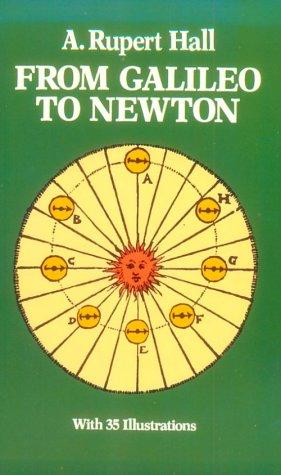
A. Rupert Hall, an authority on the history of science, studies the near century from 1630 to 1720 that separates Galileo's astronomical findings from Newton's mathematical work, a stretch he treats as the birth of modern science. He follows the rise of an outlook built on experiment and observation: Galileo demonstrated what its methods promised, and Newton brought them to full effect. Topics include what the telescope and microscope revealed to Huygens and Leeuwenhoek, Boyle's effort to fit chemical experiments into a rational account of matter, Descartes's attempt to explain the body by chemical and physical principles, and the move from a Ptolemaic universe to a Copernican one. The jacket pitches it at anyone curious about how modern science began.
Paul Graham said its title and place in a series make it sound like a dull survey, but that it ranks among the best books on the history of science he has read.
We hope you love the books people recommend! Just so you know, The CEO Library may collect a share of sales or other compensation from the links on this page.
This book has 1 recommendation
From its title and the fact that it's part of series, Rupert Hall's _From Galileo to Newton_ sounds like it would be a boring survey, but actually it's one of the best books I've read on the history of science.
Get this book on Amazon