



About the book
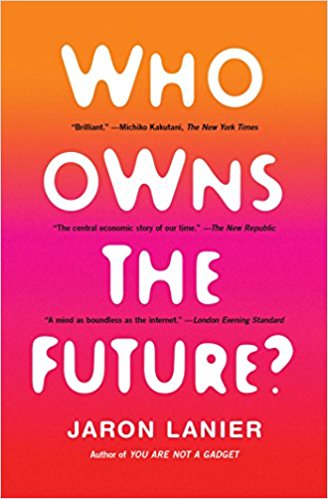
Jaron Lanier argues that online economies are squeezing out the middle class. Firms he calls Siren Servers, after the Sirens of Ulysses, collect personal data that users trade for free services, and the resulting wealth flows to the few who control the data centers. One example is Google's translation tool, which draws on translations people posted online without paying them. As an alternative, Lanier proposes a web modeled on Ted Nelson's Project Xanadu, with two-way links back to each source and micropayments for original material. The book has nine parts plus a conclusion, each part followed by an interlude, some written like short stories. It won the Peace Prize of the German Book Trade and the Goldsmith Book Prize.
Mark Manson included it in his list of five books explaining why the world seems so broken, arguing that free information at scale breeds intrusive advertising and lets a few servers gather enough data to abuse their power.
We hope you love the books people recommend! Just so you know, The CEO Library may collect a share of sales or other compensation from the links on this page.
This book has 1 recommendation
Mark Manson (Founder/MarkManson.net)
Free information sounds great on paper, but it causes all sorts of deep, systemic problems when implemented at scale. For one, it spawns an extremely aggressive and intrusive advertising model. For two, the economics of data collection create a situation where a small number of servers collect all the data and gain terrifying amounts of power…and then inevitably abuse that power (*cough* Facebook). For three, when software eats the world, it generates greater inequality, not less. For four, when all information becomes free, it becomes valueless and meaningless. People feel entitled to start believing whatever they want, since it’s always unclear what information is more valuable than other information. For five–he can keep going… and does.
Get this book on Amazon | Barnes & Noble | Apple Books