Books Recommended by Mark Zuckerberg
 During his sophomore year at Harvard, Mark Zuckerberg dropped out in order to focus on his project, Facebook. The rest is history. By 2018, Facebook had more than 2 billion users, and Zuckerberg had steadily made his way up the “richest people in the world” list, ranking 5th in 2017.
As for books, Mark Zuckerberg has always been a public advocate of reading and even started an online book club in 2015. Called A Year of Books, it was hosted on his personal Facebook account and he made a recommendation every two weeks. According to Zuckerberg, all books were supposed to “emphasize learning about new cultures, beliefs, histories and technologies.” The first book he recommended was soon sold out on Amazon.
But that’s not the only reading Zuckerberg does and he frequently talks about books and how important he thinks reading is. In the post announcing the book club, he said: “I’ve found reading books very intellectually fulfilling. Books allow you to fully explore a topic and immerse yourself in a deeper way than most media today. I’m looking forward to shifting more of my media diet towards reading books.”
As of 2026, Zuckerberg is the chairman and CEO of Meta Platforms, the parent company of Facebook; he co-founded both.
Books recommended by Mark Zuckerberg:
26 books recommended by Mark Zuckerberg

The Hard Thing About Hard Things: Building a Business When There Are No Easy Answers
by Ben Horowitz
Ben's experience and expertise make him one of the most important leaders not just in Silicon Valley but also in the global knowledge economy. For anyone interested in building, growing or leading a great company, this book is an incredibly valuable resource - and a funny and insightful read.

Zero to One: Notes on Startups, or How to Build the Future
This book delivers completely new and refreshing ideas on how to create value in the world.

Lean In: Women, Work, and the Will to Lead
by Sheryl Sandberg, Nell Scovell
For the past five years, I've sat at a desk next to Sheryl and I've learned something from her almost every day. She has a remarkable intelligence that can cut through complex processes and find solutions to the hardest problems. Lean In combines Sheryl's ability… Read the full quote
For the past five years, I've sat at a desk next to Sheryl and I've learned something from her almost every day. She has a remarkable intelligence that can cut through complex processes and find solutions to the hardest problems. Lean In combines Sheryl's ability to synthesize information with her understanding of how to get the best out of people. The book is smart and honest and funny. Her words will help all readers - especially men - to become better and more effective leaders.
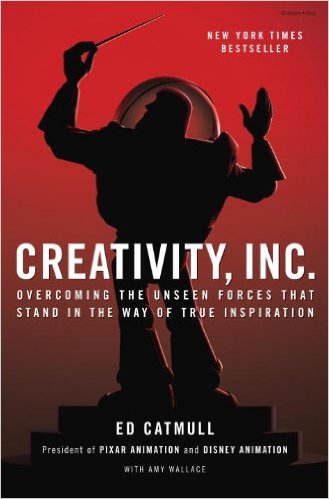
Creativity, Inc.: Overcoming the Unseen Forces That Stand in the Way of True Inspiration
This book is written by the founder of Pixar and is about his experience building a culture that fosters creativity. His theory is that people are fundamentally creative, but many forces stand in the way of people being able to do their best work. I… Read the full quote
This book is written by the founder of Pixar and is about his experience building a culture that fosters creativity.
His theory is that people are fundamentally creative, but many forces stand in the way of people being able to do their best work.
I love reading first-hand accounts about how people build great companies like Pixar and nurture innovation and creativity. This should be inspiring to anyone looking to do the same, and hopefully there will be lessons we can apply to connecting the world!

High Output Management
[Andy’s] book played a big role in shaping my management style.

The Better Angels of Our Nature: Why Violence Has Declined
My second book of the year is The Better Angels of Our Nature by Steven Pinker. It's a timely book about how and why violence has steadily decreased throughout our history, and how we can continue this trend. Recent events might make it seem like… Read the full quote
My second book of the year is The Better Angels of Our Nature by Steven Pinker. It's a timely book about how and why violence has steadily decreased throughout our history, and how we can continue this trend. Recent events might make it seem like violence and terrorism are more common than ever, so it's worth understanding that all violence -- even terrorism -- is actually decreasing over time. If we understand how we are achieving this, we can continue our path towards peace. A few people I trust have told me this is the best book they've ever read. It's a long book, so I plan on taking a month to read it rather than two weeks. I'll add a third book in two weeks that will be a shorter read to complement this. If you want to follow along with the books I'm reading and participate in conversations with the authors, you can like the page A Year of Books.

The Rational Optimist: How Prosperity Evolves
by Matt Ridley
My next book for A Year of Books is The Rational Optimist by Matt Ridley. Two of the books I've read this year -- The Better Angels of Our Nature: and Why Nations Fail -- have explored how social and economic progress work together to… Read the full quote
My next book for A Year of Books is The Rational Optimist by Matt Ridley.
Two of the books I've read this year -- The Better Angels of Our Nature: and Why Nations Fail -- have explored how social and economic progress work together to make the world better. The Better Angels argues for that the two feed off each other, whereas Why Nations Fail argues that social and political progress ultimately controls the economic progress a society makes. This next book argues the opposite -- that economic progress is the greater force is pushing society forward. I'm interested to see which idea resonates more after exploring both frameworks.
This is also the second one of Ridley's books I've read this year. Here's a photo from a few weeks back of me reading his book Genome with my dog Beast.

The Three-Body Problem
by Cixin Liu
It's a Chinese science fiction book that has gotten so popular there's now a Hollywood movie being made based on it. This will also be a fun break from all the economics and social science books I've read recently.

Ender’s Game
Oh, it’s not a favorite book or anything like that, I just added it because I liked it. I don’t think there’s any real significance to the fact that it’s listed there and other books aren’t.

The Structure of Scientific Revolutions
It's a history of science book that explores the question of whether science and technology make consistent forward progress or whether progress comes in bursts related to other social forces. I tend to think that science is a consistent force for good in the world.… Read the full quote
It's a history of science book that explores the question of whether science and technology make consistent forward progress or whether progress comes in bursts related to other social forces. I tend to think that science is a consistent force for good in the world. I think we'd all be better off if we invested more in science and acted on the results of research. I'm excited to explore this theme further.

The Beginning of Infinity: Explanations That Transform the World
Reading has given me more perspective on a number of topics — from science to religion, from poverty to prosperity, from health to energy to social justice, from political philosophy to foreign policy, and from history to futuristic fiction. This challenge has been intellectually fulfilling,… Read the full quote
Reading has given me more perspective on a number of topics — from science to religion, from poverty to prosperity, from health to energy to social justice, from political philosophy to foreign policy, and from history to futuristic fiction.
This challenge has been intellectually fulfilling, and I come away with a greater sense of hope and optimism that our society can make greater progress in all of these areas.
It's fitting to end the year with "The Beginning of Infinity" by David Deutsch, about how the way we explain things unlocks greater possibilities.

Genome: The Autobiography of a Species in 23 Chapters
by Matt Ridley
This book aims to tell a history of humanity from the perspective of genetics rather than sociology. This should complement the other broad histories I've read this year, as well as follow "Energy" well in focusing on science. I've wanted to read Matt Ridley's books… Read the full quote
This book aims to tell a history of humanity from the perspective of genetics rather than sociology. This should complement the other broad histories I've read this year, as well as follow "Energy" well in focusing on science.
I've wanted to read Matt Ridley's books for a while. His recent book "The Rational Optimist" about how progress and the economy evolve is also near the top of my ever-growing pile of books to read.

The Aeneid
by Virgil
Oh, it’s not a favorite book or anything like that, I just added it because I liked it. I don’t think there’s any real significance to the fact that it’s listed there and other books aren’t. But there are definitely books—like the Aeneid—that I enjoyed reading a lot more.

Gang Leader for a Day: A Rogue Sociologist Takes to the Streets
Gang Leader for a Day is loosely related to the themes Better Angels in that it explores what life is like for those who don't live under effective governance. I'm looking forward to reading this and finishing up Better Angels.

Why Nations Fail: The Origins of Power, Prosperity, and Poverty
by Daron Acemoglu, James Robinson
My next book for A Year of Books is Why Nations Fail by Daron Acemoğlu and James A. Robinson. This book explores the different kinds of social institutions and incentives that nations have applied to encourage prosperity, economic development and elimination of poverty. This is… Read the full quote
My next book for A Year of Books is Why Nations Fail by Daron Acemoğlu and James A. Robinson.
This book explores the different kinds of social institutions and incentives that nations have applied to encourage prosperity, economic development and elimination of poverty.
This is a good complement to our last book, Portfolios of the Poor, which focused on how people live in poverty. This one discusses why poverty exists and how to reduce it.

World Order
My next book for A Year of Books is Quantum Physics for Babies!
Just kidding. It's actually World Order by Henry Kissinger -- about foreign relations and how we can build peaceful relationships throughout the world. This is important for creating the world we all want for our children, and that's what I'm thinking about these days.

Energy: A Beginner’s Guide
by Vaclav Smil
This book is about physical rather than social sciences. It explores important topics around how energy works, how our production and use might evolve, and how this affects climate change.

Orwell’s Revenge: The 1984 Palimpsest
by Peter Huber
Many of us are familiar with George Orwell's book 1984. Its ideas of Big Brother, surveillance and doublespeak have become pervasive fears in our culture.
Orwell's Revenge is an alternate version of 1984. After seeing how history has actually played out, Huber's fiction describes how tools like the Internet benefit people and change society for the better.

Portfolios of the Poor: How the World’s Poor Live on $2 a Day
by Daryl Collins, Jonathan Morduch, Stuart Rutherford, Orlanda Ruthven
It's mind-blowing that almost half the world — almost 3 billion people — live on $2.50 a day or less. More than one billion people live on $1 a day or less. This book explains how these families invest their money to best support themselves.… Read the full quote
It's mind-blowing that almost half the world — almost 3 billion people — live on $2.50 a day or less. More than one billion people live on $1 a day or less.
This book explains how these families invest their money to best support themselves.
I hope reading this provides some insight into ways we can all work to support them better as well.

Rational Ritual: Culture, Coordination, and Common Knowledge
The book is about the concept of "common knowledge" and how people process the world not only based on what we personally know, but what we know other people know and our shared knowledge as well. This is an important idea for designing social media,… Read the full quote
The book is about the concept of "common knowledge" and how people process the world not only based on what we personally know, but what we know other people know and our shared knowledge as well.
This is an important idea for designing social media, as we often face tradeoffs between creating personalized experiences for each individual and crafting universal experiences for everyone. I'm looking forward to exploring this further.

The End of Power: From Boardrooms to Battlefields and Churches to States, Why Being In Charge Isn’t What It Used to Be
by Moisés Naím
Our first book of the year will be The End of Power by Moisés Naím. It's a book that explores how the world is shifting to give individual people more power that was traditionally only held by large governments, militaries and other organizations. The trend… Read the full quote
Our first book of the year will be The End of Power by Moisés Naím. It's a book that explores how the world is shifting to give individual people more power that was traditionally only held by large governments, militaries and other organizations. The trend towards giving people more power is one I believe in deeply, and I'm looking forward to reading this book and exploring this in more detail.

The Idea Factory: Bell Labs and the Great Age of American Innovation
by Jon Gertner
My next book for A Year of Books is The Idea Factory: Bell Labs and the Great Age of American Innovation. I'm very interested in what causes innovation -- what kinds of people, questions and environments. This book explores that question by looking at Bell… Read the full quote
My next book for A Year of Books is The Idea Factory: Bell Labs and the Great Age of American Innovation.
I'm very interested in what causes innovation -- what kinds of people, questions and environments. This book explores that question by looking at Bell Labs, which was one of the most innovative labs in history.
As an aside, I loved The Three-Body Problem and highly recommend it. If you're interested in Chinese history, virtual reality and science fiction -- I'm three for three! -- then you'll enjoy this book. I'm going to try to fit in the sequel before the end of the year as well.

The Muqaddimah
by Ibn Khaldun
It's a history of the world written by an intellectual who lived in the 1300s. It focuses on how society and culture flow, including the creation of cities, politics, commerce and science. While much of what was believed then is now disproven after 700 more… Read the full quote
It's a history of the world written by an intellectual who lived in the 1300s. It focuses on how society and culture flow, including the creation of cities, politics, commerce and science.
While much of what was believed then is now disproven after 700 more years of progress, it's still very interesting to see what was understood at this time and the overall worldview when it's all considered together.

The New Jim Crow: Mass Incarceration in the Age of Colorblindness
I read The New Jim Crow, a study of how the U.S. justice system disproportionately criminalizes and jails blacks and Latinos. Making our criminal justice system fairer and more effective is a huge challenge for our country. I’m going to keep learning about this topic,… Read the full quote
I read The New Jim Crow, a study of how the U.S. justice system disproportionately criminalizes and jails blacks and Latinos. Making our criminal justice system fairer and more effective is a huge challenge for our country. I’m going to keep learning about this topic, but some things are already clear: We can’t jail our way to a just society, and our current system isn’t working (adapted with permission from Facebook’s A Year of Books project).

The Player Of Games
This is a change of pace from all the recent social science books. Instead, it's a science fiction book about an advanced civilization with AI and a vibrant culture.

William James: Writings 1902-1910
When I read Sapiens:, I found the chapter on the evolution of the role of religion in human life most interesting and something I wanted to go deeper on.
William James was a philosopher in the 1800s who shaped much of modern psychology.
Similar reading lists
- Marc Andreessen (3 books in common)
- Naval Ravikant (3 books in common)
- Bogdan Iordache (3 books in common)