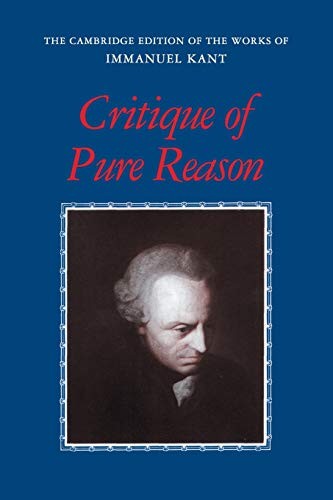

About the book
German philosopher Immanuel Kant sets out to fix the limits and scope of metaphysics and to decide whether it is possible at all. Building on empiricists such as Locke and Hume and rationalists such as Descartes, Leibniz and Wolff, he offers new accounts of space and time and tries to resolve Hume's doubts about cause and effect and Descartes' doubts about the external world. Kant separates a priori from a posteriori knowledge and analytic from synthetic judgments, then argues that metaphysics, mathematics and the first principles of natural science rest on synthetic a priori knowledge. Also known as the First Critique, it drew little notice at first but went on to shape Western philosophy and German idealism.
Mark Manson called it arguably the most important work of philosophy since the ancient Greeks, crediting Kant with uniting rationalism and empiricism through his study of the limits of human reason.
We hope you love the books people recommend! Just so you know, The CEO Library may collect a share of sales or other compensation from the links on this page.
This book has 1 recommendation
Mark Manson (Author)
Rationalism and empiricism were united under Kant’s immense observations about the limits of human cognition and reason. Arguably the most important philosophical work since the ancient Greeks.
Get this book on Amazon