Books Recommended by Mark Manson
Reading lists by year: 2020
Books by Mark Manson


51 books recommended by Mark Manson

Sapiens: A Brief History of Humankind
An impersonal account of human nature and behavior and the structures that form human society. Imagine if an alien visited Earth for a few thousand years and then had to write a report to explain humans back home.
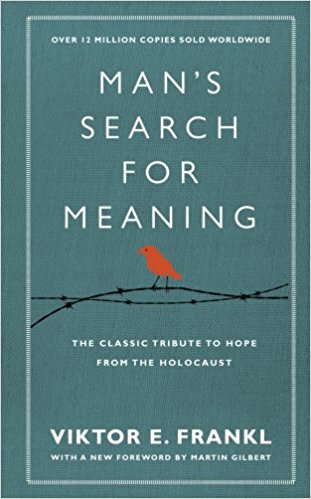
Man’s Search for Meaning – The Classic Tribute to Hope from the Holocaust
Frankl also survived Auschwitz, but he also happened to be a celebrated psychiatrist. This book argues for a therapeutic model based on a human sense of meaning, with much of it argued from Frankl’s experiences with the Nazis.

The 7 Habits of Highly Effective People
Another self-help classic, this time geared towards productivity and discipline. Timeless.

Thinking, Fast and Slow
The Nobel Prize winner’s authoritative description and explanation of the cognitive biases that wreak havoc on our ability to understand the world.

Indistractable: How to Control Your Attention and Choose Your Life
by Nir Eyal
Indistractable is the most practical and realistic approach to balancing technology with well-being. A must-read for anyone with a smartphone.

Meditations
Imagine a self-help book written by the emperor of roughly ⅓ of the planet. Yeah, that’s what this is.

Atomic Habits: An Easy & Proven Way to Build Good Habits & Break Bad Ones
by James Clear
A lot of people email me asking about habits - how to form good ones, how to break bad ones, how to stop doing the dumb shit we always do. I've got a friend named James Clear. He's an accomplished author and business owner and… Read the full quote
A lot of people email me asking about habits - how to form good ones, how to break bad ones, how to stop doing the dumb shit we always do. I've got a friend named James Clear. He's an accomplished author and business owner and is kind of a "habit guru." He's probably forgotten more habits research than I've ever brought myself to look at. He just launched his first book. It's called Atomic Habits and it's probably the most practical and complete guide I've ever seen about habit formation and habit change. Do check it out. And then email him and tell him that I have luscious and beautiful hair and he doesn't. Then stick out your tongue and go, "Nyah, nyanya, nyah, nyah."

Stillness Is the Key
by Ryan Holiday
In this age of manufactured outrage and constant distraction, the ability to choose a focused inner stillness is arguably more important than ever before. Ryan Holiday’s book revives ancient wisdom that calls for a quiet life in a noisy and restless world.

The Four Agreements: A Practical Guide to Personal Freedom
Maybe the most condensed piece of wisdom on the market. Can be read in a day, yet practiced for a lifetime.

The Prince
by Machiavelli
Written almost 500 years ago, this book is just as relevant now as ever. Machiavelli spent his career as an advisor to royalty. This book was his realistic and amoral advice to any would-be ruler or person in power.
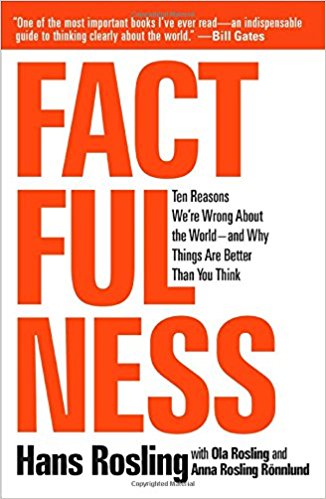
Factfulness: Ten Reasons We’re Wrong about the World–and Why Things Are Better Than You Think
by Hans Rosling, Anna Rosling Rönnlund, Ola Rosling
A wonderful book on how our minds resist accepting data that runs counter to our assumptions and beliefs.

On Writing: A Memoir Of The Craft
by Stephen King
I read a bunch of books on writing before I wrote my first book and the two that stuck with me were Stephen King’s book and “On Writing Well” by Zinsser (which is a bit on the technical side).

The Better Angels of Our Nature: Why Violence Has Declined
A tome of a book. Pinker tracks the history of violence and makes the counterintuitive and controversial argument that we are less violent today than we have ever been before.

On the Shortness of Life
by Seneca
A short rumination on death and what makes life worth living by probably the most famous stoic philosopher.

Grit: The Power of Passion and Perseverance
A definitive look at how resilience or the ability to persist in the face of adversity determines our results more than almost anything else.

Stumbling on Happiness
The best book on happiness I’ve ever come across. Gilbert’s take is that the problem isn’t that we can’t find happiness, it’s that we often don’t even know what happiness is.

The Lessons of History
The Durants wrote an 11-volume “History of the World” series that took up pretty much all of their adult lives. This small book is the distillations of the lessons from their decades of research.

The Structure of Scientific Revolutions
A controversial classic from the 60s, Kuhn argues that large leaps in scientific progress necessarily must come from outside the scientific establishment.

On Writing Well: The Classic Guide to Writing Nonfiction
I read a bunch of books on writing before I wrote my first book and the two that stuck with me were Stephen King’s book and “On Writing Well” by Zinsser (which is a bit on the technical side).

The Happiness Hypothesis: Finding Modern Truth in Ancient Wisdom
A wonderful marriage between ancient philosophical wisdom and modern psychological findings. Discusses how old ideas on happiness, success and virtue often have present-day scientific weight to them.

The Republic
by Plato
The origination of political science and a brilliant critique of government that is still important today.

A Brief History of Time
A beautiful layman’s explanation of the Big Bang, astrophysics and the theoretical explanations behind our universe.

Daring Greatly: How the Courage to Be Vulnerable Transforms the Way We Live, Love, Parent, and Lead
by Brene Brown
Brown’s best, in my opinion. This book shows how her ideas about vulnerability look in the real world.
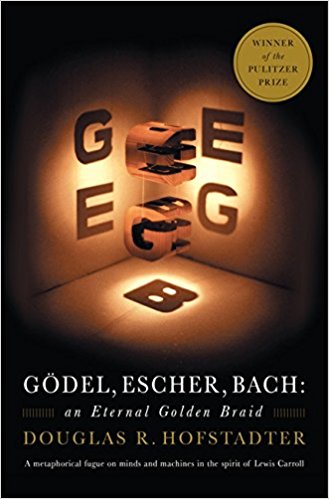
Gödel, Escher, Bach: An Eternal Golden Braid
Perhaps the most dizzyingly brilliant, fascinating and interesting books I’ve ever read. The book is about paradoxes and how they can explain consciousness. But to understand his thesis, Hofstadter takes you on an unforgettable journey to get there.

The Coddling of the American Mind: How Good Intentions and Bad Ideas Are Setting Up a Generation for Failure
by Greg Lukianoff, Jonathan Haidt
The kids aren’t alright. No, really—I know every generation says that, but this time it’s true. Kids who grew up with smartphones (and have begun to enter the university system) are emotionally stunted, overly fragile, and exhibiting mental health issues at alarming rates. I expected… Read the full quote
The kids aren’t alright. No, really—I know every generation says that, but this time it’s true. Kids who grew up with smartphones (and have begun to enter the university system) are emotionally stunted, overly fragile, and exhibiting mental health issues at alarming rates.
I expected this book to be another, “Let’s all shit on social media together,” party, but it’s not. Social media, of course, does get its own chapter. But most of the book is focused on cultural shifts that have happened over the past couple generations.

The Denial of Death
Written on his death bed, a look at how all of our anxieties and motivations are ultimately rooted in our fear of our own non-existence. Profound and thought-provoking.

The Power Broker: Robert Moses and the Fall of New York
The biography of Robert Moses, the most powerful man in New York City for most of the 20th century. The book uses his life to look at the nature of power.

The Righteous Mind: Why Good People are Divided by Politics and Religion
Haidt puts forth an argument for a personality-driven model of political beliefs. Hugely important to understand why people believe what they believe.

The True Believer: Thoughts on the Nature of Mass Movements
by Eric Hoffer
Hoffer’s classic looks at the nature of mass movements, why they happen, and how they organize. Reportedly, this was Eisenhower’s favorite book.

Tiny Beautiful Things: Advice on Life and Love from Dear Sugar
Incredibly vulnerable, poignant and well-written. Strayed’s responses as an advice columnist are some of the most beautiful pieces of advice I’ve ever come across.

A Short History of Nearly Everything
by Bill Bryson
A tour de force of modern scientific thought. Bryson starts at the Big Bang and brings us all the way up to present day.
Beyond Good and Evil
Probably Nietzsche’s most cogent statement of his views: that traditional morality is subjective and that people must evolve to a higher understanding of what’s valuable and what is not.

Big Magic: Creative Living Beyond Fear
I read a bunch of books on writing before I wrote my first book and the two that stuck with me were Stephen King’s book and “On Writing Well” by Zinsser (which is a bit on the technical side). I was also surprised by how much I enjoyed Elizabeth Gilbert’s “Big Magic.”

Nicomachean Ethics
by Aristotle
The root of Aristotelian ethics and therefore many of the moral ideas that underpin all of western civilization.
Reasons and Persons
by Derek Parfit
A difficult read and a total mind-fuck. Through painstaking logic, Parfit shows that: acting in self-interest is impossible, personhood does not exist, and pretty much anything you do is evil. This is considered by many to be the most important psychological work of the later 20th century.

The Paradox of Choice: Why More is Less
An incredibly important idea for living in the age of abundance. Schwartz’s work finds that by multiplying our options and choices, we often become less satisfied with whatever we choose. Huge implications for 21st-century life.

The Rise and Fall of the Third Reich: A History of Nazi Germany
The most definitive historical account of World War II, the Nazi Party and the Holocaust.

The Selfish Gene
Sometimes an idea changes how you see the world. Dawkins explains the revolutionary idea in biology of gene selection, completely flipping evolutionary thought on its head.
An Essay Concerning Human Understanding
by John Locke
The basis of empiricism the rival school of philosophical thought during the Enlightenment.

Bowling Alone: The Collapse and Revival of American Community
The problem is that modern society requires community engagement to function well. When everyone is just off doing their own thing, a lot of institutions and social necessities begin to fall apart. My own takeaway from this, having studied human happiness for years, is that… Read the full quote
The problem is that modern society requires community engagement to function well. When everyone is just off doing their own thing, a lot of institutions and social necessities begin to fall apart. My own takeaway from this, having studied human happiness for years, is that people rely on a sense of community and shared effort to maintain healthy and stable lives. The fact that people are opting out of these opportunities for community and local impact, in a ceaseless obsession of online media and global fame, likely explains a lot of the social changes going on today. And a lot of the drops in mental health, as well.
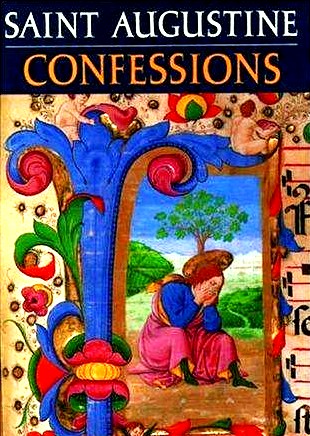
Confessions
The original memoir. Confessions would inform a millennium of church theology and western philosophy.
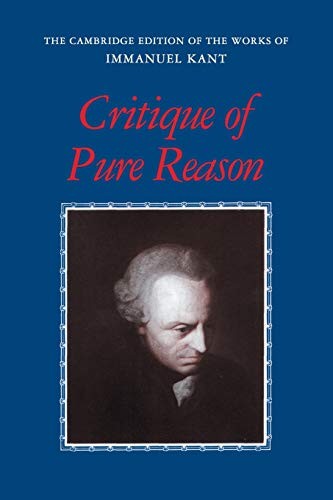
Critique of Pure Reason
Rationalism and empiricism were united under Kant’s immense observations about the limits of human cognition and reason. Arguably the most important philosophical work since the ancient Greeks.

Democracy for Realists: Why Elections Do Not Produce Responsive Government (Princeton Studies in Political Behavior)
by Christopher H. Achen, Larry M. Bartels
Democracy for Realists is an eye-opening and sober look at the data on democracy and what makes it effective/ineffective. Hint: people are stupid.

Ethics
The basis of rationalism, a school of philosophical thought that dominated during the Enlightenment.
Meditations on First Philosophy
Source of Descartes famous “I think, therefore I am.”
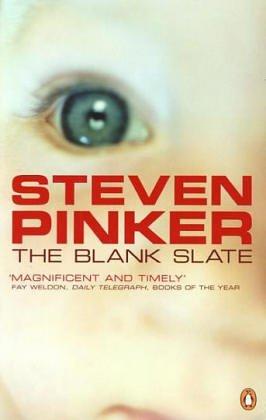
The Blank Slate
A tour de force against the desire to avoid, ignore and deny the role of genetics in human behavior and society.

The Death of Expertise: The Campaign against Established Knowledge and Why it Matters
With our modern obsessions of freedom and equality and happiness, Nichols argues that we’ve taken these rights and applied them to a domain where they don’t belong: truth. People feel “the right” to have their opinions and beliefs respected, even though they are not qualified,… Read the full quote
With our modern obsessions of freedom and equality and happiness, Nichols argues that we’ve taken these rights and applied them to a domain where they don’t belong: truth. People feel “the right” to have their opinions and beliefs respected, even though they are not qualified, have no credentials or offer no expertise. Pundits on TV claim that their beliefs that climate change doesn’t exist, or that vaccinations are harmful, are just as valid — and should be respected just as much — as their scientific counterparts. Nichols’ blame is scattershot. Everything from the usual internet gripes, to cable television, to the grade inflation happening in school, to school bureaucracies treating students as customers rather than, well, students.
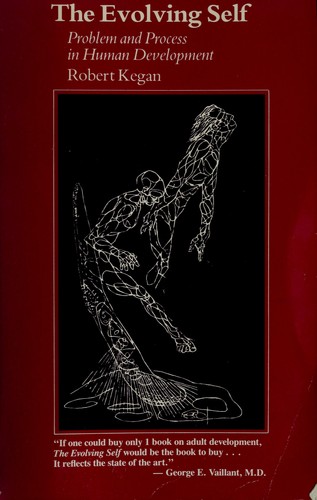
The Evolving Self
by Robert Kegan
Kegan integrates almost 100 years of developmental psychology research into one elegant model of how humans grow and mature.
The Origins of Political Order
Fukuyama’s magnum opus, a sprawling history of all human political systems and why some succeed and others fail.
The Road Less Traveled
Based on the famous line from Robert Frost, Peck’s book is often considered a self-help classic for its realism and sober viewpoints on suffering, love and growth.

Who Owns the Future?
by Jaron Lanier
Free information sounds great on paper, but it causes all sorts of deep, systemic problems when implemented at scale. For one, it spawns an extremely aggressive and intrusive advertising model. For two, the economics of data collection create a situation where a small number of… Read the full quote
Free information sounds great on paper, but it causes all sorts of deep, systemic problems when implemented at scale. For one, it spawns an extremely aggressive and intrusive advertising model. For two, the economics of data collection create a situation where a small number of servers collect all the data and gain terrifying amounts of power…and then inevitably abuse that power (*cough* Facebook). For three, when software eats the world, it generates greater inequality, not less. For four, when all information becomes free, it becomes valueless and meaningless. People feel entitled to start believing whatever they want, since it’s always unclear what information is more valuable than other information. For five–he can keep going… and does.
Similar reading lists
- Ryan Holiday (9 books in common)
- James Clear (7 books in common)
- Ola Olusoga (5 books in common)
- Barack Obama (4 books in common)
- David Heinemeier Hansson (4 books in common)
- Chelsea Frank (4 books in common)