Books Recommended by David Heinemeier Hansson
 David Heinemeier Hansson (also known as DHH) is the creator of Ruby on Rails framework, CTO and co-founder of project management software Basecamp, and author of several bestselling books.
In 1999, David built a Danish online gaming news website, which he ran until 2001. He managed to attract the attention of Jason Fried, who hired him to build a web-based project management tool that became Basecamp, the project management software (formerly known as 37signals).
During the development process, Hansson used the Ruby programming language to develop a custom web framework. He released the framework separately from the project management tool in 2004, as the open source project Ruby on Rails. In 2005, David was awarded with the title “Hacker of the Year” for this project.
David co-wrote a few books with his business partner, Jason Fried: ‘Getting Real’ ‘Rework’, ‘Remote’, and ‘It Doesn’t Have to be Crazy at Work’.
Fried and DHH talk about what they call “the calm company”: a different company culture that questions all the “best practices” that became the norm in today’s work environment.
In 2019, Basecamp released a free web-based book as a follow-up to ‘Getting Real’, titled ‘Shape Up: Stop Running in Circles and Ship Work that Matters‘, where they go into details on how they work at Basecamp.
David is also a Le Mans class-winning racing driver, passionate about photography – you can see his work on Flickr, and he frequently writes on Basecamp’s blog, Signal v. Noise.
As of 2026, he is a partner and chief technology officer at 37signals, the company behind Basecamp. He also created Omarchy, an Arch Linux distribution for developers.
All books recommended or written by DHH:
Reading lists by year: 2018 · 2017
Books by David Heinemeier Hansson


40 books recommended by David Heinemeier Hansson
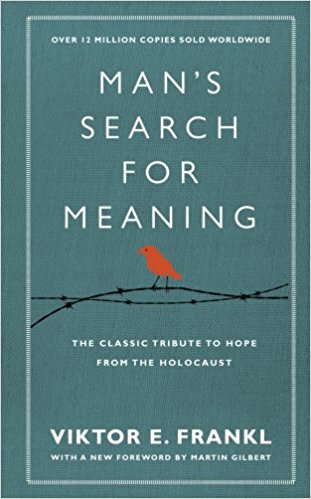
Man’s Search for Meaning – The Classic Tribute to Hope from the Holocaust
Man’s Search for Meaning is part holocaust first-person account, part exposition of “logotherapy”, and combined completely profound. Humans can endure the most gruesome treatment if they have something to live for. And they can die from the most pampered existence once there’s nothing to live… Read the full quote
Man’s Search for Meaning is part holocaust first-person account, part exposition of “logotherapy”, and combined completely profound. Humans can endure the most gruesome treatment if they have something to live for. And they can die from the most pampered existence once there’s nothing to live for. It’s exceedingly well written, and wonderfully short. The author wrote it in 9 days, and yet it’s probably the best book on the philosophy of life that I’ve read outside of the Stoic classics. Very highly recommended.

Influence: The Psychology of Persuasion
It taught me so much about marketing and human psychology. I keep referring back to that book all the time. It has been instrumental in inspiring the marketing strategies I used to propel Rails and Basecamp.

Meditations
Marcus Aurelius is probably my favorite Stoic philosopher, with Seneca as a close second. And in Stoic philosophy I’ve found kindred thought for mental coping mechanisms I had employed since childhood. It refined them further and cemented their place as the guiding philosophy of life for me.

Antifragile: Things That Gain from Disorder
Ryan recommended this earlier, and I had already read Black Swan, so followed up here. I’m of two minds with this book so far. On the one hand, I think Nassim does a great job at taking swings at The Establishment thinking in economics in… Read the full quote
Ryan recommended this earlier, and I had already read Black Swan, so followed up here. I’m of two minds with this book so far. On the one hand, I think Nassim does a great job at taking swings at The Establishment thinking in economics in particular, but on the other hand the tone at times seem needlessly polemic. The irony of me saying that of all people is not lost. Which is perhaps the best take-away from the book so far: That it’s a mirror on how to present arguments in a compelling, believable, punchy fashion, without getting lost swinging at ghosts and straw men.

Bad Blood: Secrets and Lies in a Silicon Valley Startup
A gripping tale of a fake-it-till-you-make-it bet that did not pay off, resulted in hundreds of millions in dollars defrauded from investors and partners, and, most crucially, tons of patients who got the wrong answers on their blood tests. Some times to disastrous effects, financially… Read the full quote
A gripping tale of a fake-it-till-you-make-it bet that did not pay off, resulted in hundreds of millions in dollars defrauded from investors and partners, and, most crucially, tons of patients who got the wrong answers on their blood tests. Some times to disastrous effects, financially or medically.
It’s also a fascinating study of human nature and how much we at times want to believe. Elizabeth Holmes was a character that so many people wanted to believe. Her story about disrupting moribund medical technology (with its stale insistence on “scientific rigor” and “verifiable results”) was too good to check. So good that a long list of Valley dignitaries all got suckered in.
Finally, there’s a rich vein of anecdotes on how destructive excessive loyalty, workaholism, investor pressures, and sleep deprivation can be to your morals, sanity, and manners.
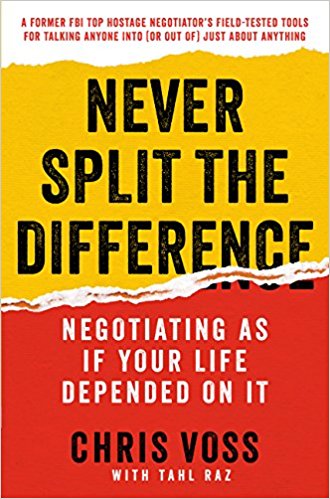
Never Split the Difference: Negotiating As If Your Life Depended On It
by Chris Voss, Tahl Raz
A former FBI hostage negotiator distills the heuristics of how to defuse tense negotiations with unstable humans, and proposes that they’re the same for every other form of negotiations. Not a bad premise, and I found several of the techniques compelling and resonant of what… Read the full quote
A former FBI hostage negotiator distills the heuristics of how to defuse tense negotiations with unstable humans, and proposes that they’re the same for every other form of negotiations. Not a bad premise, and I found several of the techniques compelling and resonant of what I’ve read about human biases and flaws from other sources. But the FBI bravado is grating. It’s basically “hey, I just learned this stuff, and I whattadoknow, I become so bad ass that I could beat every Harvard trained negotiator with my sick mind hacks”. Okay dude. Nassim Taleb would be proud though ?.

The Better Angels of Our Nature: Why Violence Has Declined
Great reminder that for all that is terrible in modern societies, we’ve still made dramatic leaps over even the pretty recent past. Yet still there are these pockets of intense violence, especially in the US, that beggars investigation. And investigate Mr Pinker does. I’m only… Read the full quote
Great reminder that for all that is terrible in modern societies, we’ve still made dramatic leaps over even the pretty recent past. Yet still there are these pockets of intense violence, especially in the US, that beggars investigation. And investigate Mr Pinker does. I’m only about 20% through this 800-page tome, but it’s surprisingly easy reading, if not always easy to stomach (he goes DEEP on all the ways humans used to torment each other in all its gory detail).

The Richest Man in Babylon
This is a 1920s classic version of How To Get Rich. The ancestor of all the pale imitations, like Rich Dad/Poor Dad, that came since. And while I scoffed at plenty of the allegories from ancient Babylon that presents the lessons, it was still a… Read the full quote
This is a 1920s classic version of How To Get Rich. The ancestor of all the pale imitations, like Rich Dad/Poor Dad, that came since. And while I scoffed at plenty of the allegories from ancient Babylon that presents the lessons, it was still a neat package. And at least ancient Babylon is a more interesting backdrop for teaching lessons about money than some suburban house flipper. I ended up liking it more at the end than I did at the beginning. It’s also a really interesting tie-in with that debt history book.

Thinking in Bets: Making Smarter Decisions When You Don’t Have All the Facts
by Annie Duke
Thinking in Bets by Annie Duke applies the thinking of poker decision making to the rest of life. That’s not as stupid of a premise as it sounds. I particularly like the idea of “resulting”, which is to judge the quality of a decision solely… Read the full quote
Thinking in Bets by Annie Duke applies the thinking of poker decision making to the rest of life. That’s not as stupid of a premise as it sounds. I particularly like the idea of “resulting”, which is to judge the quality of a decision solely by its outcome. Lots of good decisions lead to bad outcomes because it's very rare that even good decisions have 100% chance of success. This draws on a lot of cognitive studies by Kahneman and others that show just how poor our default decision making powers are. But it’s also needlessly dragging. This is one of those books that would have been far better if it was a quarter the length, so to make it through, you have to be pretty good at skipping ahead when she belabors the point for the fifth time.

Why We Sleep: Unlocking the Power of Sleep and Dreams
Maybe if you weren’t so tired all the time, you’d have time to read a book. I strongly recommend Why We Sleep. The science on sleep is clear: Continuously being deprived will make you miserable and ultimately kill you. Watching the stock market at 6am won’t counter that.

How to Change Your Mind: What the New Science of Psychedelics Teaches Us About Consciousness, Dying, Addiction, Depression, and Transcendence
How we get locked into viewing the world, ourselves, and each other in a certain way, and then finding it difficult to relate to alternative perspectives or seeing other angles. Studying philosophy, psychology, and sociology is a way to break those rigid frames we all… Read the full quote
How we get locked into viewing the world, ourselves, and each other in a certain way, and then finding it difficult to relate to alternative perspectives or seeing other angles.
Studying philosophy, psychology, and sociology is a way to break those rigid frames we all build over time. But that’s still all happening at a pretty high level of perception.
Mind altering drugs, and especially psychedelics, is another way to break up those rigid frames, but at a much lower level. So I’ve been fascinated with LSD, mushrooms, and other psychedelics for a long time, despite being too scared to actually try (partly because of a family history of mental illness, partly because, you know, THE LAW, and partly because of having something to lose).
Anyway, that’s a really long preamble to why I started reading this book. Partly to understand the history of psychedelics, the discovery of LSD, the clinical studies from the 50s and 60s, and then finally to live vicariously through the author’s account of his own experiments.
So far I’d say it’s a bit of a mixed bag. I find the pacing too slow, the minutia overwhelming, and the character set too large. I wish there was a cocaine version of this book in 1/4 the length and the tempo turned up ?.

Thirst: A Story of Redemption, Compassion, and a Mission to Bring Clean Water to the World
Scott Harrison, the founder of charity:water, tells his redemption story of being a night-club promoter in NYC that ran the hard and fast life for a decade before rediscovering his faith and committing to a mission for humanity. It’s an at times tense story that… Read the full quote
Scott Harrison, the founder of charity:water, tells his redemption story of being a night-club promoter in NYC that ran the hard and fast life for a decade before rediscovering his faith and committing to a mission for humanity. It’s an at times tense story that gives you a real appreciation for those who choose to give their life to a higher cause.
It was also at times a bit of hard book for me to read, because it’s such a personal account of how Harrison’s christianity drives his work down to a tactical level that’s difficult to connect to as an atheist. Tactically praying for specific milestones and luck, and then going OMG: God Just Totally Bailed Us Out, is just so far out of my personal worldview that it was pretty jarring at times.
But I’m thankful that Harrison didn’t shy away from going there, even if he must have known that it could be a bit grating for people not in the “of course you ask the big man upstairs for a favor” camp. It’s authentic, and it’s healthy to see how most of the people in the world uses religion to guide their daily life.
It’s also just a feel-good story that inspires you to care. I signed up monthly donations via The Spring.

Company of One: Why Staying Small Is the Next Big Thing for Business
by Paul Jarvis
Growth has been hacked to simply mean “more”. More revenue, more customers, more employees, more products, more, more, more. That’s a tragically myopic view of growth. Paul Jarvis will help you open your eyes to a broader, wiser definition of growth. One of learning, one… Read the full quote
Growth has been hacked to simply mean “more”. More revenue, more customers, more employees, more products, more, more, more. That’s a tragically myopic view of growth. Paul Jarvis will help you open your eyes to a broader, wiser definition of growth. One of learning, one of betterment, one of contentment. There’s never been a more opportune time to launch or run companies that embrace having and being “enough”. The most important ingredient is a new worldview. Company of One can give you just that.

The Life-Changing Magic of Tidying
by Marie Kondo
On a lighter note, I finished The Life-Changing Magic of Tidying Up: The Japanese Art of Decluttering and Organizing by Marie Kondo. It’s a short book, but it still manages to repeat itself a lot. And yet the core patterns it covers are as effective… Read the full quote
On a lighter note, I finished The Life-Changing Magic of Tidying Up: The Japanese Art of Decluttering and Organizing by Marie Kondo. It’s a short book, but it still manages to repeat itself a lot. And yet the core patterns it covers are as effective as they are simple. I’ve been on a decluttering kick at home and feel so much better because of it. It was also the kickstarter for the conversation with JF that lead us to sell WWR.

The Republic
by Plato
I’m about a third through this and still can’t tell whether Plato is making a mockery of Socrates ideas for the idyllic society or not. So many of the arguments presented as Socrates’ are so tortured and with so disconnected leaps of logic that it’s… Read the full quote
I’m about a third through this and still can’t tell whether Plato is making a mockery of Socrates ideas for the idyllic society or not. So many of the arguments presented as Socrates’ are so tortured and with so disconnected leaps of logic that it’s hard to take it at face value. Yet still, it’s good fun to follow the dialogue. It reads more like a play than a book, and again, immensely accessible. It’s fun to see the lines that continue from a book like this to the considerations of the Stoics all the way to Adam Smith and the Wealth of Nations and then onto a modern critique and history in that Debt: First 5,000 Years. A conversation spanning millennia.

To Kill a Mockingbird
by Harper Lee
Really liking this one so far. I’m sure a lot of people here probably read it in high school or whatever, but it wasn’t on the Danish curriculum, so here I am!

Zen Mind, Beginner’s Mind: Informal Talks on Zen Meditation and Practice
Zen Mind, Beginner’s Mind is an introduction to Buddhism and meditation. There are a lot of echoes between Stoicism and Buddhism, and I thought I’d dive deeper into this on recommendation from Eric Dodson (great YouTube channel for existentialist and stoic explainers and introductions). So… Read the full quote
Zen Mind, Beginner’s Mind is an introduction to Buddhism and meditation. There are a lot of echoes between Stoicism and Buddhism, and I thought I’d dive deeper into this on recommendation from Eric Dodson (great YouTube channel for existentialist and stoic explainers and introductions). So far I’m finding that there’s longer between the nuggets of wisdom that slot into my brain than with the stoic writers. But I do enjoy the thread of pushing back against dualistic ideas (separating you from the world, good from bad, etc), as well as the focus on the Beginner’s Mind.

Capital in the Twenty-First Century
This is the book that was catapulted by its conclusion: r > g. That the rate of return on capital is greater than the growth rate of the economy. Which means that capital, and the people who own it, will end up with a larger… Read the full quote
This is the book that was catapulted by its conclusion: r > g. That the rate of return on capital is greater than the growth rate of the economy. Which means that capital, and the people who own it, will end up with a larger and larger share of all wealth and income in the economy as time goes on.
It’s a dense dive into the historical data on wealth, income, and economic growth from the optic of inequality. It’s fascinating to realize just how little economic growth there was before the industrial revolution (<0.1% at times). Centuries would pass where societies got almost no more productive, and thus saw no per-capita growth.
In the past few decades, we’ve moved closer to the historical norm. Real growth through productivity improvements is down a lot since that former golden period, most western societies aren’t growing their population as rapidly as they were, and thus hereditary wealth and privileges are coming back as prime determinants of inequality.
Despite the dense approach, the book isn’t in anyway unapproachable. It’s well told and easily read. And it’s about as timely as it gets. Highly recommend it so far.

The Undoing Project: A Friendship That Changed Our Minds
Michael Lewis is just a great storyteller, and tell a story in this he does. It’s about two Israeli psychologists, their collaboration on the irrationality of the human mind, and the milestones they set with concepts like loss-aversion, endowment effect, and other common quirks that… Read the full quote
Michael Lewis is just a great storyteller, and tell a story in this he does. It’s about two Israeli psychologists, their collaboration on the irrationality of the human mind, and the milestones they set with concepts like loss-aversion, endowment effect, and other common quirks that the assumption of rationality doesn’t account for. It’s a bit long-winded, but if you like Lewis’ style, you probably won’t mind it. The scientific recaps could have happened in a book 1/10th the length, but then you’d miss out on the character portrayals of these two fascinating scientists.

The Wealth of Nations
by Adam Smith
It’s hard to believe that Adam Smith wrote this tome in 1776! It’s written in such plain, if repetitive, language that it makes the basic economic theory easily accessible. That doesn’t mean it’s right. The book on Debt: The First 5,000 Years spent a fair… Read the full quote
It’s hard to believe that Adam Smith wrote this tome in 1776! It’s written in such plain, if repetitive, language that it makes the basic economic theory easily accessible. That doesn’t mean it’s right. The book on Debt: The First 5,000 Years spent a fair chunk of time debunking many of Smith’s accounts of “the barter, truck, and exchange” cultures that supposedly were the rude state of man before the introduction of coinage. But the book is all the better from a read with a critical mind. It presents such a basic, plain description of capitalism and its functions that serves as a proper grounding for a critique. It’s also full of kinda hilarious deep dives into the exchange rates between silver and gold and other commodities set to 1770s prices.

Debt: The first 5,000 Years
After a few false starts, I finally got going with this, and what a treat. It shoots down the common myth that prior to money, everyone just bartered shit. I give you a pig, you give me five pies and a hat. Evidence shows that… Read the full quote
After a few false starts, I finally got going with this, and what a treat. It shoots down the common myth that prior to money, everyone just bartered shit. I give you a pig, you give me five pies and a hat. Evidence shows that just wasn’t at all how things went. Most societies were structured either rather communistic (take what you need, give what you can) or with a loose debt-ledger system (or a combination of both). But where things get really interesting is how the emergence of market economies (and money) changed the relationship with human life and dignity. Especially as a consequence of slavery, which put a very explicit price on that which previously was priceless. All sorts of fascinating historical links to women wearing veils (to distinguish them from women who could be bought), how debt peonage really took off once slavery came profitable (so debtors could be sold, or their children sold, if they failed to repay), and how other morality got intertwined with debt. It’s truly eye-opening, and the lines trace disturbingly well from millennia.

Notes from Underground
It’s such a lovely weird book. Partly, it’s Dostoyevsky giving us an account, through the fictional narrator, of his view on the human condition. Just one quote: “But man has such a predilection for systems and abstract deductions that he is ready to distort the… Read the full quote
It’s such a lovely weird book. Partly, it’s Dostoyevsky giving us an account, through the fictional narrator, of his view on the human condition. Just one quote: “But man has such a predilection for systems and abstract deductions that he is ready to distort the truth intentionally, he is ready to deny the evidence of his senses only to justify his logic”. The idea of humans being suckered into living only according to “logic”, and not only the vanity of such a pursuit, but the impossibility of it, is a wonderful antidote to much of contemporary morality and wonkness.
In the same vein, I found the attack on the core underpinning concept of much of 20th century economics, that people are rational beings making rational choices to optimize their own advantage, so forward for its time. Notes from Underground is from 1864, yet manages to expertly debunk that narrow view. Freedom, not material advantage, is the “most advantageous advantage”, even when that’s the freedom to do yourself harm. (Any analysis of Brexit and Trump would do well to consult with Dostoyevsky).
Also, major bonus points for being a short book, yet packing so much punch.
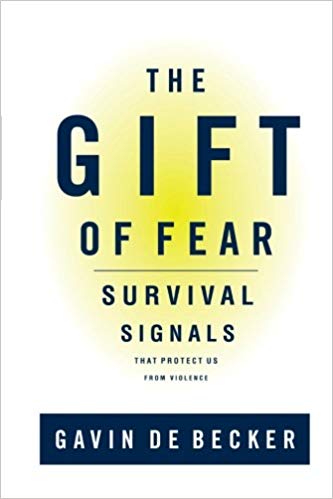
The Gift of Fear : Survival Signals That Protect Us from Violence
The Gift of Fear by Gavin de Becker shares a bunch of anecdotes from violent attacks, how the victims often knew per instinct that something wasn’t right, but suppressed that instinct for fear of seeming rude or silly or whatever. He also presents a bunch… Read the full quote
The Gift of Fear by Gavin de Becker shares a bunch of anecdotes from violent attacks, how the victims often knew per instinct that something wasn’t right, but suppressed that instinct for fear of seeming rude or silly or whatever. He also presents a bunch of analytical frameworks for evaluating threats, stalkers, and other menaces.
But it’s not a dry textbook. Gavin had a violent upbringing and brings a lot of personal anecdotes and perspectives to bear as well.

Dreamland: The True Tale of America’s Opiate Epidemic
by Sam Quinones
Dreamland: The True Tale of America’s Opiate Epidemic accounts how a few tiny studies on low rates of opium addiction for hospital patients lead to a whole new paradigm for treating pain in the US. From mid 90s to late 2000s, opium pain pills were… Read the full quote
Dreamland: The True Tale of America’s Opiate Epidemic accounts how a few tiny studies on low rates of opium addiction for hospital patients lead to a whole new paradigm for treating pain in the US. From mid 90s to late 2000s, opium pain pills were basically considered non-addictive by much of the medical community. This led to crazy over-prescription, subsequent addiction, and a whole new market for heroin once someone was hooked and couldn’t afford the pills. This heroin market was served in large parts by on-demand delivery services driven by small-town Mexican heroin cells. It’s really an interesting tale of medical hubris, corporate greed, the devastation of whole areas to addiction, and more. It could have used a lot more editing, though. So many phrases, “black-tar heroin delivered like pizza”, just keep repeating over and over again. But it’s a solid recount of how we got to this tragic point that opium overdoses is now a leading cause of death for many demographic groups in the US. More people die from drug overdoses than from car crashes now. Tragic.

Escape from Freedom
by Erich Fromm
Escape from Freedom examines what happened to the human psyche when we went from a medieval caste system to the modern world. As we gained freedom from all sorts of oppressions, we also got detached from a predictable and safe role in society. That anxiety… Read the full quote
Escape from Freedom examines what happened to the human psyche when we went from a medieval caste system to the modern world. As we gained freedom from all sorts of oppressions, we also got detached from a predictable and safe role in society. That anxiety is often difficult to cope with, especially when things don’t turn out the way we aspired to. Fromm argues that we need to balance this freedom from with just as much freedom to. Positive freedom, not just negative freedom.
The book was written in 1941 and obviously colored by the rise of fascism and the world wars. But it’s message is as timely today, in an age of populism and unease. It draws a compelling connection between the loss of identity and belonging with the appeal of authoritarian figures. That it’s a human response to turn away from freedom when that freedom turns life into anxiety and disappointment. So from Trump to Erdogan, there’s strong public support.

Existentialism Is a Humanism
As a newcomer to existentialism, it can be hard to wrap your brain around the core concepts when reading novels like The Stranger or Nausea, or writers like Kierkegaard. You get a great feel for the existentialist ambience, but what are the core tenets? This… Read the full quote
As a newcomer to existentialism, it can be hard to wrap your brain around the core concepts when reading novels like The Stranger or Nausea, or writers like Kierkegaard. You get a great feel for the existentialist ambience, but what are the core tenets? This (short) book delivers it about as directly as you can get it, as it’s basically just two parts: 1) An account of a lecture/defense that Sartre gave of existentialism, complete with a debate with someone in the audience, and 2) Sartre’s review of Camus’ The Stranger.
The key concept that Sartre explains is the notion of Existence Precedes Essence. It’s one of those concepts that sounds intimidatingly highbrow, but really just means that we are not born with a purpose before we are “thrown into this world”. That then sets the stage for reaffirming human choice. That we always have a choice. That destiny or divine purpose is just an excuse we use not to make (hard) choices.
This description of existentialism really resonated with me and provides a wonderful alternative vision to the stoic philosophy. There’s much agreement between the two views of the world, but also enough disagreement to provide interesting tension. Especially between the Aurelius version of stoicism, which endlessly belabors the point of doing “what the universe asks you to do”.

Fear and Trembling
While most of the 20th century existentialists, like Sartre and Camus, were devout atheists, Kierkegaard is an existentialist obsessed with faith. Fear and Trembling is a very long, and at times obtuse, meditation on the topic of faith and doubt. It uses the story of… Read the full quote
While most of the 20th century existentialists, like Sartre and Camus, were devout atheists, Kierkegaard is an existentialist obsessed with faith. Fear and Trembling is a very long, and at times obtuse, meditation on the topic of faith and doubt. It uses the story of Abraham and Isaac to contrast the ideas of faith and humanism. Kierkegaard is in awe of Abraham’s faith and how it compels him to sacrifice Isaac, and he uses that to interrogate the topic of faith in general.
I found the theological acrobatics employed by Kierkegaard a bit strained, to say the least. But it was a fascinating read none the less, and Kierkegaard’s language and metaphors and incredible depth is inspiring. I’m keen to give this a read in the original Danish form.

How to Break Up with Your Phone: The 30-Day Plan to Take Back Your Life
I don’t know a lot of people in our business who feels completely at ease with how much they use their phone. After years and years of a tiny minority trying to get our attention about the dangers of phone addiction, it seems like the… Read the full quote
I don’t know a lot of people in our business who feels completely at ease with how much they use their phone. After years and years of a tiny minority trying to get our attention about the dangers of phone addiction, it seems like the idea is finally getting a larger audience. I’m certainly in that camp. I use my phone too much, and I’d like to use it less.
This book gave me the motivation to try harder to actually do something about it. There weren’t any novel arguments or statistics I hadn’t heard before, but recounting them all in one place provided the final push to finally do something. This kicked off a thorough review of not just how much time I spend on my phone, but reviewing what that usage has done to both my capacity for concentration and my motivation to go deeper on topics. I didn’t like the conclusions I came to.
So I’ve started taking more sabbaticals from my phone and the addictive apps on it. I credit this book for finally getting that going.

Nausea
Existentialists like Sartre are big on the idea that you can’t just relate a philosophical worldview by simply stating values, techniques, and facts. To understand existentialism, you must feel it. Breathe its ambience. It’s like a tonal curve for life. Yes, we can talk about… Read the full quote
Existentialists like Sartre are big on the idea that you can’t just relate a philosophical worldview by simply stating values, techniques, and facts. To understand existentialism, you must feel it. Breathe its ambience. It’s like a tonal curve for life. Yes, we can talk about highlights, shadows, and all the mechanical elements of that tonal curve, but you won’t become an artist just by knowing these mechanics. It goes much deeper than that.
So Nausea is a novel, which imparts the existentialist tonal curve. I’m only halfway through it, but I’m liking it a lot already. It’s not as wild or erratic as Notes from Underground, but it’s got that similar feel. That the narrator gives us a mirror to reflect in, and those reflections are novel because we’re outside the normal tonal curve.

Political Order and Political Decay: From the Industrial Revolution to the Globalization of Democracy
In the last 10% of Political Order and Political Decay. It’s been about 50 hours of listening between that volume and the first, The Origins of Political Order. So quite the undertaking. But we’ve finally progressed all the way through the history of political order… Read the full quote
In the last 10% of Political Order and Political Decay. It’s been about 50 hours of listening between that volume and the first, The Origins of Political Order. So quite the undertaking. But we’ve finally progressed all the way through the history of political order and arrived at Fukuyama’s diagnosis of modern day societies. It’s a truly epic journey, and one that’s uniquely timely to the current upheaval. “Things are so crazy now” is only something you’d say in the absence of a historical perspective. These books give you just that and then some.

Refactoring: Improving the Design of Existing Code (2nd Edition)
This is next on my list of technical books to read! Refactoring is one of two programming books that I’ve read multiple times (the other is Smalltalk Best Practice Patterns), and I’m due for another reading. What perfect time then to dive into Martin Fowler’s… Read the full quote
This is next on my list of technical books to read! Refactoring is one of two programming books that I’ve read multiple times (the other is Smalltalk Best Practice Patterns), and I’m due for another reading. What perfect time then to dive into Martin Fowler’s long anticipated 2nd edition, now using JavaScript rather than Java for the code examples.
Like the stoic books, I read Refactoring and that Smalltalk book again and again not because I’m going to learn something new, per se, but because I want to be reminded about what I already know. And what better time to reread than just as we’re kicking off a new major project that needs a fresh architectural foundation.
Also, these two books just remind every time of how much I love the craft of programming. It’s not just having the programs, it’s not just solving problems, it’s simply using my hands and head to program that in and of itself is sublime.

Smalltalk Best Practice Patterns
by Kent Beck
My favorite book about programming. It’s more than twenty years old now, but it remains as relevant as ever. It captures so many of the patterns I love to dance with when writing beautiful code.

Ten Arguments for Deleting Your Social Media Accounts Right Now
by Jaron Lanier
Where How to Break Up with Your Phone took a pretty tame view of social media – hey, maybe it’s not great, so let’s just do a bit less – this book goes for the jugular. Reviewing all the ways social media companies are conspiring… Read the full quote
Where How to Break Up with Your Phone took a pretty tame view of social media – hey, maybe it’s not great, so let’s just do a bit less – this book goes for the jugular. Reviewing all the ways social media companies are conspiring against us, selling our attention to the highest bidder (whether that be an ad for a new car or a new president), and how the algorithms that drive social-media engagement are self-optimizing for the worst of everything.
There wasn’t that much new information here, especially for someone who’s been paying close attention to the social media landscape for years, but there was a renewed sense of outrage and purpose and contextualization. The idea that you don’t have to believe that Zuckerberg or Sandberg are evil masterminds plotting to derail civilization to accept that social-media engagement algorithms that run on auto-pilot much of the time could very well get us there.
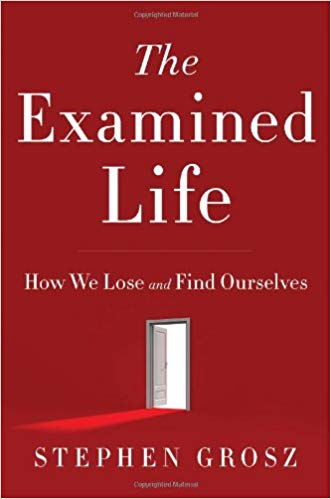
The Examined Life: How We Lose and Find Ourselves
A chance to reflect on your own life and flaws by reading how others deal with theirs. I also love how short the vignettes are. Usually just a few pages. It’s immensely readable, and the whole book is refreshingly succinct as well.

The Manual: A Philosopher’s Guide to Life
by Epictetus
Despite being an avid student of Stoicism for many years, I somehow never got around to reading the last of the three big stoic writers, Epictetus, directly. What a mistake. The Manual is a profound work. It’s perhaps the most tensely packed tome of wisdom… Read the full quote
Despite being an avid student of Stoicism for many years, I somehow never got around to reading the last of the three big stoic writers, Epictetus, directly. What a mistake. The Manual is a profound work. It’s perhaps the most tensely packed tome of wisdom I’ve ever had the good fortune to read. Seriously. You can read it in about an hour, but you’ll spend weeks, years, hell, probably the following lifetime, trying to internalize and master its hard-hitting truths and techniques.
It was a great reminder that even if you think you know a topic, there’s a big gap between knowing and knowing. None of the themes in The Manual would be novel to anyone who’ve read Aurelius or Seneca, but the delivery is so different, so direct, that the material still comes across as entirely fresh.
The Manual is the double espresso of stoicism.

The Myth of Sisyphus and Other Essays
by Albert Camus
Camus’ philosophical exposition of absurdity, suicide in the face of meaninglessness, and other cherry topics that continue on from his fictional work in novels like The Stranger. It’s surprisingly readable, unlike many other mid 20th century philosophers, yet no less deep or pointy. It’s a… Read the full quote
Camus’ philosophical exposition of absurdity, suicide in the face of meaninglessness, and other cherry topics that continue on from his fictional work in novels like The Stranger. It’s surprisingly readable, unlike many other mid 20th century philosophers, yet no less deep or pointy. It’s a great follow-up, as an original text, to that book The Age of Absurdity, I recommended last year. Still working through it.

The New Tsar: The Rise and Reign of Vladimir Putin
With Russia fever at Defcon 2, I’ve made it about half-ways through the biography The New Tsar: The Rise and Reign of Vladimir Putin. It’s a great refresher on post-WWII history, the cold war, KGB, but above all, on the forces present in Russia. There… Read the full quote
With Russia fever at Defcon 2, I’ve made it about half-ways through the biography The New Tsar: The Rise and Reign of Vladimir Putin. It’s a great refresher on post-WWII history, the cold war, KGB, but above all, on the forces present in Russia.
There are many lines to draw between Russia’s struggles after the fall of Communism with the fundamental political theories of Fukuyama (Origins of Political Order / Political Order And Political Decay). When taken together, they lend an all the more human and sympathetic story to why things played out the way they did. While still appreciating just how immense the level of brokenness, corruption, and brutality that journey has brought with it.

The Self-Driven Child: The Science and Sense of Giving Your Kids More Control Over Their Lives
by William Stixrud, Ned Johnson
A few years ago, Bill Stixrud and Ned Johnson started noticing the same problem from different angles: Even high-performing kids were coming to them acutely stressed and lacking motivation. Many complained they had no control over their lives. Some stumbled in high school or hit… Read the full quote
A few years ago, Bill Stixrud and Ned Johnson started noticing the same problem from different angles: Even high-performing kids were coming to them acutely stressed and lacking motivation. Many complained they had no control over their lives. Some stumbled in high school or hit college and unraveled. Bill is a clinical neuropsychologist who helps kids gripped by anxiety or struggling to learn. Ned is a motivational coach who runs an elite tutoring service. Together they discovered that the best antidote to stress is to give kids more of a sense of control over their lives. But this doesn't mean giving up your authority as a parent. In this groundbreaking book they reveal how you can actively help your child to sculpt a brain that is resilient, and ready to take on new challenges.
The Self-Driven Child offers a combination of cutting-edge brain science, the latest discoveries in behavioral therapy, and case studies drawn from the thousands of kids and teens Bill and Ned have helped over the years to teach you how to set your child on the real road to success. As parents, we can only drive our kids so far. At some point, they will have to take the wheel and map out their own path. But there is a lot you can do before then to help them tackle the road ahead with resilience and imagination.

The Stranger
by Albert Camus
Seminal novel on existentialism and the absurd by Albert Camus from 1946. Explores that feeling of disconnectedness from society, its norms, and the absurdity of every day life. Striking first-person account in a powerful, direct language.

The Trial
by Franz Kafka
It’s a fascinating writing style with a 3rd party observer that’s treated as an extension of the protagonists own sentiments and mind. It’s also just exquisitely written. And the concept of being on trial for charges unknown by a vast, impersonal, yet petty, bureaucracy pulls… Read the full quote
It’s a fascinating writing style with a 3rd party observer that’s treated as an extension of the protagonists own sentiments and mind. It’s also just exquisitely written. And the concept of being on trial for charges unknown by a vast, impersonal, yet petty, bureaucracy pulls from a timeless well of societal anxieties. So far, so very good. About half way through.
Similar reading lists
- Mark Manson (4 books in common)
- Bill Gates (3 books in common)
- Anant Jain (3 books in common)