
About the book
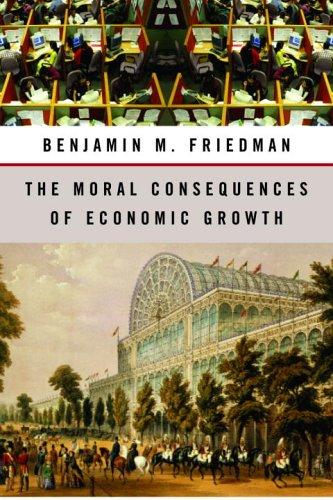
Benjamin M. Friedman, author of Day of Reckoning, argues that economic growth brings far more than material gains. Drawing on the social and political history of the big Western democracies, the United States since the Civil War above all, he finds that rising incomes make societies more open and democratic. In poorer countries, he contends, it is growth itself, more than a high standard of living, that drives political and social liberalization. Even the richest nations put their democratic values at risk when incomes stand still, because wealth alone does not guard against a drift toward rigidity and intolerance once citizens lose the sense of getting ahead. Friedman also offers concrete policy proposals for growth at home and worldwide.
Writing in Poor Charlie's Almanack, Charlie Munger described the author as a distinguished Harvard economics professor and said the book takes on the way economics and morals interact, much as he had hoped to in his own talk.
We hope you love the books people recommend! Just so you know, The CEO Library may collect a share of sales or other compensation from the links on this page.
This book has 1 recommendation
Charlie Munger (Vice Chairman/Berkshire Hathaway)
Since the talk was given, I came across a book published by Alfred A. Knopf in 2005. It was written by a distinguished Harvard economics professor, Benjamin M. Friedman, and dealt with the interplay of economics and morals, much as I wished to in my talk.
Get this book on Amazon