Books Recommended by Erik Rostad
Read the interview: Erik Rostad
11 books recommended by Erik Rostad
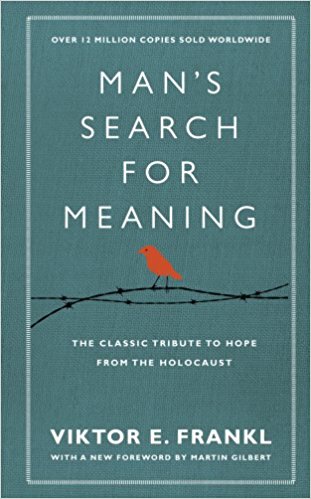
Man’s Search for Meaning – The Classic Tribute to Hope from the Holocaust
You can get books on particular skills you need for a given job, but these books will help having the right mindset for a career and how work should fit into the greater story of your life. For pursuing the right goals: Man’s Search for Meaning by Viktor Frankl.

Start with Why: How Great Leaders Inspire Everyone to Take Action
by Simon Sinek
You can get books on particular skills you need for a given job, but these books will help having the right mindset for a career and how work should fit into the greater story of your life. For determining an overarching purpose: Start with Why by Simon Sinek.

Thinking, Fast and Slow
I call 2018 my Year of Kahneman. Until 2018, I had never heard of him but now I see him everywhere. I read this book towards the beginning of 2018 and after that, at least 1 in 4 of my other 52 books for 2018… Read the full quote
I call 2018 my Year of Kahneman. Until 2018, I had never heard of him but now I see him everywhere. I read this book towards the beginning of 2018 and after that, at least 1 in 4 of my other 52 books for 2018 referenced Kahneman. Not only did they reference him, they built key ideas in the book from Kahneman’s research.
This was not only a good book, it’s an important and foundational book.

Tools of Titans: The Tactics, Routines, and Habits of Billionaires, Icons, and World-Class Performers
by Tim Ferriss
The biggest change was starting this Books of Titans reading project. I started the project as a direct result of reading Tools of Titans. I loved all of the book recommendations and thought it would be a great challenge to try to read 52 of… Read the full quote
The biggest change was starting this Books of Titans reading project. I started the project as a direct result of reading Tools of Titans. I loved all of the book recommendations and thought it would be a great challenge to try to read 52 of those suggested books in a year. I started it in 2017. All of the 52 books from my 2017 reading list were suggested in Tools of Titans. Half of my 2018 reading list came from books suggested by podcast guests of the Tim Ferriss Show podcast. For 2019, there are probably only a handful that were suggested in Ferriss podcast episodes. I take my suggestions from wherever I can find them.

AI Superpowers: China, Silicon Valley, and the New World Order
by Kai-Fu Lee
Finished it this morning. Incredible. I'd go so far as to suggest you stop what you're reading to read this one. It's a fantastic mix of AI and humanity with realistic fear and hope for the future. This was perfect timing for topics I've been thinking about lately.

The Art of Learning: An Inner Journey to Optimal Performance
For career books, I'll focus on more overarching themes. You can get books on particular skills you need for a given job, but these books will help having the right mindset for a career and how work should fit into the greater story of your life. For learning new skills: The Art of Learning by Josh Waitzkin.

The ONE Thing: The Surprisingly Simple Truth Behind Extraordinary Results
For career books, I'll focus on more overarching themes. You can get books on particular skills you need for a given job, but these books will help having the right mindset for a career and how work should fit into the greater story of your life. For focus: The One Thing by Gary Keller.

A Mind at Play: How Claude Shannon Invented the Information Age
Here is something that recently helped me. It comes from the book A Mind at Play by Jimmy Soni & Rob Goodman. I'll quote the passage directly and then describe how it helped me: "What does information really measure? It measures the uncertainty we overcome.… Read the full quote
Here is something that recently helped me. It comes from the book A Mind at Play by Jimmy Soni & Rob Goodman. I'll quote the passage directly and then describe how it helped me:
"What does information really measure? It measures the uncertainty we overcome. It measure our chances of learning something we haven't yet learned. Or, more specifically: when one thing carries information about another–just as a meter reading tells us about a physical quantity, or a book tells us about a life–the amount of information it carries reflects the reduction in uncertainty about the object."
When I read this, I actually felt as if a lightbulb was going off. One question I get a lot with this reading project is "how do you remember everything you read?" I have never liked that question because I think it is the wrong question. Here, the authors sort of flip that on its head. If you don't read, or you aren't learning about a topic, the possibilities of what that could be are endless. By reading, you are "reducing the uncertainty about the object," so in theory, it should take less space in your mind.
I had begun noticing that the more I read, the more clarity of thought I was having. I did not expect this at all. I had assumed that the more I read, the more confused or inundated I would become. But the opposite happened. One of the main reasons I give for this is that if you begin seeing ideas over and over, in different types of books, that makes that idea stronger. If I'm reading about the importance of time in novels, biographies, business books, and other non-fiction, that is an important topic and one I should focus on.
The quote above helped me figure out the other piece of the information overload puzzle. That the more you read, the more you are narrowing down the possibilities of what could be. If I have yet to read a book about a particular historical figure, then the possibilities are endless in terms of information that could be true in my head about that person. But, if I have read a book or two about the person, it narrows down the possibilities.

The World Is Flat: A Brief History of the Twenty-first Century
I read this book in 2003 or 2004. I was out of college and working in my first job. Friedman convincingly showed that the world was rapidly changing and that I would soon be competing for jobs with people from around the world. I decided… Read the full quote
I read this book in 2003 or 2004. I was out of college and working in my first job. Friedman convincingly showed that the world was rapidly changing and that I would soon be competing for jobs with people from around the world. I decided to go to graduate school as a direct result of being convinced of his argument in this book.
What's interesting is that I don't think these two books would have the same impact on me now than they did at the time I read them. Certain books are meant for certain seasons of life. Also, the Friedman one is probably quite outdated by now. In other words, these wouldn't necessarily be the books I recommend to people now, but they shaped the direction of my life.

The Art of X-Ray Reading: How the Secrets of 25 Great Works of Literature Will Improve Your Writing
One of the final books I chose for my 2019 reading list was The Art of X-Ray Reading by Roy Peter Clark. I heard about this book in a podcast episode I listened to at the very end of the year. It was the last… Read the full quote
One of the final books I chose for my 2019 reading list was The Art of X-Ray Reading by Roy Peter Clark. I heard about this book in a podcast episode I listened to at the very end of the year. It was the last book I added to my list and I had to remove another book I had in the set of 52. This one sounded so interesting that I couldn't pass it up (and it was book 4 of my list and I absolutely loved it).

The Sacred Romance: Drawing Closer to the Heart of God
by Brent Curtis, John Eldredge
Don’t worry, this is not a steamy romance novel ;). I read this book in 1998 just before I was heading to college. In the book, Eldredge showed how the stories we relate to in novels, movies, and plays are echos of the grand narrative… Read the full quote
Don’t worry, this is not a steamy romance novel ;). I read this book in 1998 just before I was heading to college. In the book, Eldredge showed how the stories we relate to in novels, movies, and plays are echos of the grand narrative of the Christian story. As a Christian, this was very compelling and led me to literature. I began reading some of the classics in earnest after reading this book [...] My entire library and reading history can be traced to this one book.
Similar reading lists
- Chris Goward (3 books in common)
- Anant Jain (3 books in common)