Books Recommended by Alina Vârlănuță
Read the interview: Alina Vârlănuță
16 books recommended by Alina Vârlănuță

On Writing: A Memoir Of The Craft
by Stephen King
My professional path – copywriting – somehow intertwines with my unprofessional (hahaha) path – writing so I would recommend reading literature for both. Somehow reading and writing are two ways of doing the same thing: storytelling (even when you read you tell yourself a story… Read the full quote
My professional path – copywriting – somehow intertwines with my unprofessional (hahaha) path – writing so I would recommend reading literature for both. Somehow reading and writing are two ways of doing the same thing: storytelling (even when you read you tell yourself a story in your own voice, bringing your personal emotion and empathy to the story you’re reading). The only difference is that when I’m reading, panic is far away from me, in a safe place. Nevertheless, the words below helped me rewrite and think twice before adding an exclamation point: On Writing by Stephen King.
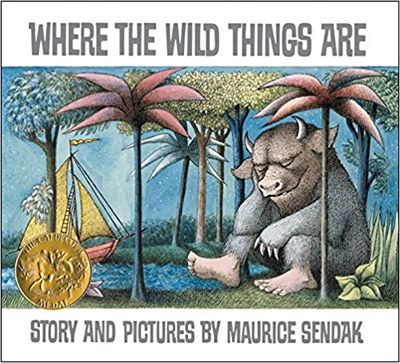
Where The Wild Things Are
I don’t have [a favourite book]. But I do have favourite characters: [....] Max tamed by Maurice Sendak.

The Elements of Style
by William Strunk, E. B. White
My professional path – copywriting – somehow intertwines with my unprofessional (hahaha) path – writing so I would recommend reading literature for both. Somehow reading and writing are two ways of doing the same thing: storytelling (even when you read you tell yourself a story… Read the full quote
My professional path – copywriting – somehow intertwines with my unprofessional (hahaha) path – writing so I would recommend reading literature for both. Somehow reading and writing are two ways of doing the same thing: storytelling (even when you read you tell yourself a story in your own voice, bringing your personal emotion and empathy to the story you’re reading). The only difference is that when I’m reading, panic is far away from me, in a safe place. Nevertheless, the words below helped me rewrite and think twice before adding an exclamation point: The Elements of Style.

Blow-up and Other Stories
I don’t believe in big impacts. I think that every book changed my way of seeing things one way or another. Even the bad ones. Especially the bad ones. There is where I found the best writing learnings. But if I were to name a… Read the full quote
I don’t believe in big impacts. I think that every book changed my way of seeing things one way or another. Even the bad ones. Especially the bad ones. There is where I found the best writing learnings. But if I were to name a book that excited me most, it would definitely be ‘Blow-up and Other Stories’ by Julio Cortazar and actually everything written by him. When I first read the short stories I was so envious of his ease of living in alternative realities, that I developed my own.

Drunk by Noon
I dig a lot for experimental writings. Here are some of my findings: [...] Drunk by noon – by Jennifer L. Knox

Dust
I dig a lot for experimental writings. Here are some of my findings: Dust – by Arkadii Dragomoshchenko.

Geek Love
I don’t have [a favourite book]. But I do have favourite characters: [....] Binewskis family exhibited by Katherine Dunn.

Life: A User’s Manual
I don’t have [a favourite book]. But I do have favourite characters: [....] All inhabitants of the apartment block on 11Rue Simon-Crubellier who lived inside George Perec’s ‘Life. A user’s manual.’.

Olive Kitteridge
I don’t have [a favourite book]. But I do have favourite characters: The flawed and broken Olive Kitteridge assembled by Elizabeth Strout.

Self-Editing for Fiction Writers: How to Edit Yourself Into Print
My professional path – copywriting – somehow intertwines with my unprofessional (hahaha) path – writing so I would recommend reading literature for both. Somehow reading and writing are two ways of doing the same thing: storytelling (even when you read you tell yourself a story… Read the full quote
My professional path – copywriting – somehow intertwines with my unprofessional (hahaha) path – writing so I would recommend reading literature for both. Somehow reading and writing are two ways of doing the same thing: storytelling (even when you read you tell yourself a story in your own voice, bringing your personal emotion and empathy to the story you’re reading). The only difference is that when I’m reading, panic is far away from me, in a safe place. Nevertheless, the words below helped me rewrite and think twice before adding an exclamation point: Self-editing for Fiction Writers.

Stories for Nighttime and Some for the Day
by Ben Loory
I’m currently reading ‘Stories for Nighttime and Some for the Day’ by Ben Loory and I’m enjoying each very short-story.

The Sacred Book of the Werewolf
I dig a lot for experimental writings. Here are some of my findings: [...] The Sacred Book of the Werewolf by Victor Pelevin.

The Sea, the Sea
by Iris Murdoch
I don’t have [a favourite book]. But I do have favourite characters: [....] The disturbing sea seen by Iris Murdoch.

The White Book
by Han Kang
I recently read it and it still flickers on my mind. It is an autobiographical writing reflecting on the narrator’s baby sister who died two hours after her birth. It is fragmented into different perspectives. Each opens a white dimension where mourning, frailty and death… Read the full quote
I recently read it and it still flickers on my mind. It is an autobiographical writing reflecting on the narrator’s baby sister who died two hours after her birth. It is fragmented into different perspectives. Each opens a white dimension where mourning, frailty and death are dissolving word by word, in utter silence.
I loved the structure as the author makes at the beginning a list of the white things that are connected to the narrative. I read it as a book of and on silence, the silence you feel in front of the big words like death and life. The big, yet fragile words. One of my favorite lines: (related to a particular white pebble) ‘If silence could be condensed into the smallest, most solid object, this is how it would feel’.
I know that I shouldn’t judge a book by its cover, but for me it is very important how the paper feels when touched, how the cover completes the whole story. ‘The White Book’ is a beautiful book that feels frail, yet strong when touched (thick pages, just like in a photo book) and the photographs inserted in it complete the visual words.

Uncle Shawn and Bill and the Almost Entirely Unplanned Adventure
I’m also finishing ‘Uncle Shawn and Bill and the almost entirely unplanned adventure’ by A.L. Kennedy & Gemma Correll (illustrations). It’s a book for children and it makes me laugh when nobody’s watching.

Uncreative Writing: Managing Language in the Digital Age
I read it after I finished an MA in Writing and it was exactly what I needed to burst my bubble. I loved it because it questioned everything and it perfectly matched my skepticism towards creative writing courses. Regardless of my amazing experience within the… Read the full quote
I read it after I finished an MA in Writing and it was exactly what I needed to burst my bubble. I loved it because it questioned everything and it perfectly matched my skepticism towards creative writing courses. Regardless of my amazing experience within the creative writing masters, nobody can teach you how to write, but somebody can definitely teach you how to rewrite and how to read. In a world where everybody urges you to be original, creative, Goldsmith states that you can totally be creative with somebody else’s work with a little help from the Internet: word processing, databasing, recycling, sampling, appropriation, coding (‘Pure Poems’ written by Shigeru Matsui in alphanumeric binaries), plundering, programming, and even plagiarizing. Yes, plagiarizing. The most eloquent example (I love it) is this essay entitled ‘The Ecstasy of Influence: A plagiarism’. Jonathan Lethem brilliantly shows us that nothing is original in literature – all ideas has been shared, recycled, stolen, quoted, translated, re-translated, imitated, pirated, patch written, re-written and so on. The essay is the perfect example for this – not a single word or idea belongs Jonathan Lethem. Everything is borrowed from others’ books, ideas, writings. Goldsmith even taught the ‘Uncreative Writing’ course at the University of Pennsylvania where students were not allowed to bring to the class any trace of originality and creativity.