Books Recommended by Austin Kleon
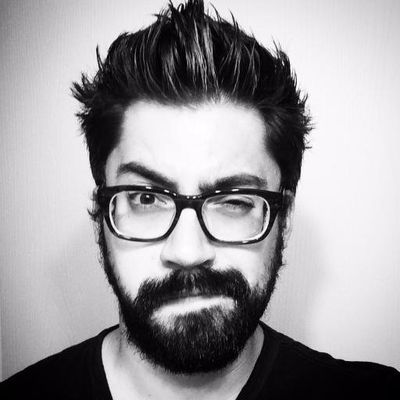 Austin Kleon is an artist who draws and a bestselling author.
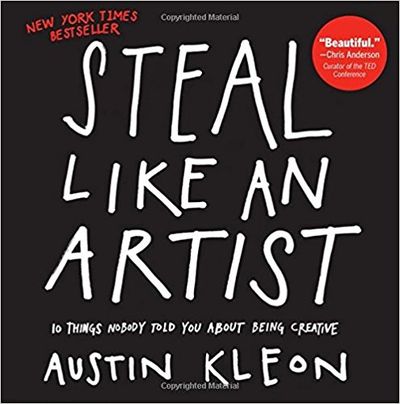
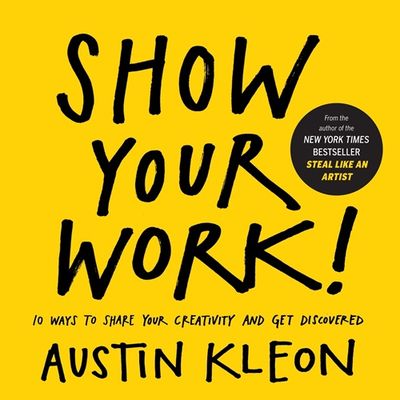
Austin published the books ‘Steal Like an Artist: 10 Things Nobody Told You About Being Creative‘ and ‘Show Your Work! 10 Things Nobody Told You About Getting Discovered‘, where he talks about creativity and marketing in the digital age.
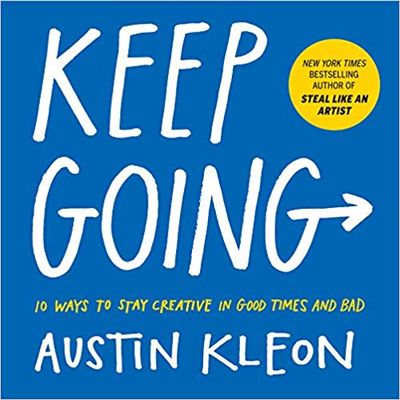
His book ‘Keep Going‘ came out in April 2019. It’s a guide to staying creative in good times and bad. This book was born from his 2018 talk at Bond Conference in San Francisco, here he shared 10 tools that have helped him stay creative in chaotic times.
He also released a book called ‘Newspaper Blackout’, a collection of blackout poems that The New Yorker said “resurrect the newspaper when everybody else is declaring it dead” (you can check out here a video about it).
Kleon’s books have been translated into over 20 languages.
Previously, he worked as a librarian, web designer and advertising copywriter.
His later books include Don’t Call It Art (2026).
If you want to follow his work, we highly recommend that you subscribe to his Friday newsletter, where he sends lists of 10 things he believes are worth sharing.
All books recommended or written by Austin Kleon:
Reading lists by year: 2018 · 2017
Books by Austin Kleon
35 books recommended by Austin Kleon

Ego Is the Enemy
by Ryan Holiday
The Comedian BIll Hicks said the world was tainted with fevered egos. In Ego Is the Enemy, Ryan Holiday writes us all a prescription: humility. This book is packed with stories and quotes that will help you get out of your own way. Whether you're starting out or starting over, you'll find something to steal here.

Tao Te Ching
by Lao Tzu
Every one of these poems reads like a subtweet of the president. Le Guin’s footnotes are great, too: In response to “having a lot of things, a lot of money: / shameless theives. / Surely their way / isn’t the way,” she writes, “So much for capitalism.”)

How to Live: Or A Life of Montaigne in One Question and Twenty Attempts at an Answer
Book that introduced me to one of my new favorite thinkers: Sarah Bakewell’s How To Live: Or A Life Of Montaigne.

The Gift: Creativity and the Artist in the Modern World
by Lewis Hyde
I’m not really sure what to say about this book. It just kind of re-affirmed a lot of what I’ve been thinking about making art: that it’s important for me to have a day job, so I can separate work from play, and that the… Read the full quote
I’m not really sure what to say about this book. It just kind of re-affirmed a lot of what I’ve been thinking about making art: that it’s important for me to have a day job, so I can separate work from play, and that the more generous you are with your audience (through blogging, teaching, sharing, etc.) the better off you’ll be as an artist—spiritually and financially.

Amusing Ourselves to Death: Public Discourse in the Age of Show Business
by Neil Postman
Earlier this year Postman’s son Andrew wrote an op-ed with the title, “My dad predicted Trump in 1985 — it’s not Orwell, he warned, it’s Brave New World.” Postman wrote: “What Orwell feared were those who would ban books. What Huxley feared was that there… Read the full quote
Earlier this year Postman’s son Andrew wrote an op-ed with the title, “My dad predicted Trump in 1985 — it’s not Orwell, he warned, it’s Brave New World.” Postman wrote: “What Orwell feared were those who would ban books. What Huxley feared was that there would be no reason to ban a book, for there would be no one who wanted to read one.”

Montaigne
by Stefan Zweig
Zweig wrote this before his suicide, while exiled in Brazil during World War II. To get Montaigne, Zweig said, “you should not be too young, too deprived of experience and life’s deceptions, and it is precisely a generation like ours, cast by fate into the… Read the full quote
Zweig wrote this before his suicide, while exiled in Brazil during World War II. To get Montaigne, Zweig said, “you should not be too young, too deprived of experience and life’s deceptions, and it is precisely a generation like ours, cast by fate into the cataract of the world’s turmoil, to whom the freedom and consistency of his thought conveys the most precious aid.”


300 Arguments: Essays
I had a couple of magical Manguso readings this year: On a summer trip to San Francisco, I bought this in the morning at Christopher’s Books in Potrero, and then read most of it later that afternoon in the Yerba Buena Gardens. Later in the… Read the full quote
I had a couple of magical Manguso readings this year: On a summer trip to San Francisco, I bought this in the morning at Christopher’s Books in Potrero, and then read most of it later that afternoon in the Yerba Buena Gardens. Later in the year, I found a used copy of Ongoingness: The End of A Diary in a market in Antigua, Guatemala, and read that in one sitting, too.


Arbitrary Stupid Goal
Certainly my favorite book cover of the year, the graphic designer’s memoir drops you right into a kid’s eye view of 1970s Greenwich Village. With it’s chunked sections and hand-drawn illustrations, it gave me the same kind of quick, skippy joy I get when reading Vonnegut.

Ed Emberley’s Drawing Book: Make a World
by Ed Emberley
I only came to Ed Emberley’s Ed Emberley’s Drawing Book: Make A World last year, but it’s quickly become the #1 book I recommend to people I meet who say, “I can’t draw.” In it, Ed Emberley shows you how to “make a world” with… Read the full quote
I only came to Ed Emberley’s Ed Emberley’s Drawing Book: Make A World last year, but it’s quickly become the #1 book I recommend to people I meet who say, “I can’t draw.” In it, Ed Emberley shows you how to “make a world” with just a few simple shapes, step-by-step. I love the emphasis on simplicity: if you can draw a triangle, a square, a circle, and a line, you’re good to go.

Flow: The Psychology of Optimal Experience
While re-reading Mihaly Csikszentmihalyi’s wonderful book Flow: The Psychology of Optimal Experience, I came across this passage on working crossword puzzles. I think he could just as well be talking about making blackout poems: "There is much to be said in favor of this popular… Read the full quote
While re-reading Mihaly Csikszentmihalyi’s wonderful book Flow: The Psychology of Optimal Experience, I came across this passage on working crossword puzzles. I think he could just as well be talking about making blackout poems:
"There is much to be said in favor of this popular pastime, which in its best form resembles the ancient riddle contests. It is inexpensive and portable, its challenges can be finely graduated so that both novices and experts can enjoy it, and its solution produces a sense of pleasing order that gives one a satisfying feeling of accomplishment. It provides opportunities to experience a mild state of flow to many people who are stranded in airport lounges, who travel on commuter trains, or who are simply whiling away Sunday mornings."

Henry David Thoreau: A Life
There’s been a lot of anti-Thoreau sentiment in the past years (heck, Kathryn Schulz published an article in the New Yorker called “Pond Scum”), and I didn’t even think I liked Thoreau, but Walls does a beautiful job of painting a portrait of a writer… Read the full quote
There’s been a lot of anti-Thoreau sentiment in the past years (heck, Kathryn Schulz published an article in the New Yorker called “Pond Scum”), and I didn’t even think I liked Thoreau, but Walls does a beautiful job of painting a portrait of a writer who was deeply rooted in and connected to his place, who tried his best to carve out a “deliberate” life for himself. (Pair it with NYRB’s reader edition of Thoreau’s journal, which I’ve been reading daily.)

How to Think: A Survival Guide for a World at Odds
by Alan Jacobs
I read this book twice: first, when Alan asked for a blurb, and second, when I offered to interview him at Bookpeople upon its publication. It’s a brisk, 150-page plea for sanity. Alan is a rare writer: one who not only genuinely loves to write books, but also genuinely loves teaching.

In the Blink of an Eye: A Perspective on Film Editing
by Walter Murch
A short, brilliant book about film editing that has quite a few lessons for writers, too. (It would make an excellent companion to Sidney Lumet’s Making Movies.) I first read about Murch in Lawrence Weschler’s book about his adventures in astrophysics, Waves Passing In The Night, which I picked randomly off my local library’s New Arrivals shelf.

Inventing Kindergarten
This is not only a beautifully produced illustrated history of Friedrich Froebel’s institution, it also presents a compelling case that kindergarten influenced the origins of abstract art and modern architecture. (The juxtaposition of children’s art with paintings and blueprints reminds me of David Hockney’s Secret Knowledge.)

Let’s Explore Diabetes With Owls
I read this one, then I read his collected diaries, Theft By Finding, and then I read the visual compendium, which might have even been the most interesting of the three books, but I’m listing this one because it’s hilarious, although with the interstitial fiction… Read the full quote
I read this one, then I read his collected diaries, Theft By Finding, and then I read the visual compendium, which might have even been the most interesting of the three books, but I’m listing this one because it’s hilarious, although with the interstitial fiction bits, it’s sort of like one of those classic 90s hip-hop albums where you skip the “skit” tracks.
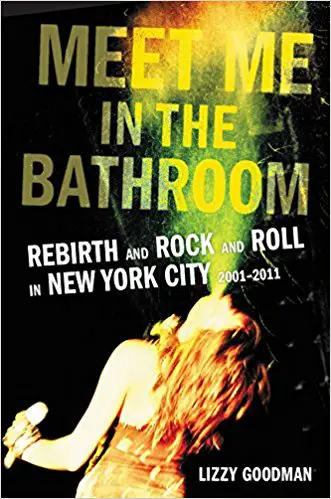
Meet Me in the Bathroom: Rebirth and Rock and Roll in New York City 2001-2011
How much you enjoy it will probably depend on your familiarity with the music — I was eighteen and a freshman in college when I saw The Strokes in Newport, KY, in 2001, so it made me pretty danged nostalgic.

Priestdaddy: A Memoir
I was a year late to this, but it’s as advertised: Smart, smutty, and laugh-out-loud funny.

Prince and the Purple Rain Era Studio Sessions: 1983 and 1984
by Duane Tudahl
A day-by-day play-by-play of Prince in the recording studio at the height of his powers. I did a lot of skimming and skipping around, but really enjoyed it.

Reinventing Bach
by Paul Elie
Takes a look at Bach’s work through the recordings of his works throughout the years. I especially liked reading about Glenn Gould and Pablo Casals.

Slow Days, Fast Company: The World, The Flesh, and L.A.
by Eve Babitz
I love reading and thinking about Los Angeles, and I love writing that’s smart and trashy, so I liked this a lot.

Sum: Forty Tales from the Afterlives
An imaginative, extremely readable book of short stories. I read at the very beginning of the year and it has stuck with me. (I think about these two afterlives a lot.)

Tape for the Turn of the Year
by A. R. Ammons
I started the book on December 6 of last year, and followed along with each entry until January 10th.

The Disaster Artist: My Life Inside The Room, the Greatest Bad Movie Ever Made
I’ve been watching The Room for years, and I first read Bissell on the subject in Magic Hours. This was a total behind-the-scenes trip, and it is no surprise to me that the movie based on it has gotten great reviews. (I still haven’t seen it.)

The Folded Clock: A Diary
I’m not so sure that Julavitz and I would get along together at a party, but dang, I liked her book.

The Importance of Living
by Lin Yutang
I learned about this 1937 bestseller while reading Will Schwalbe’s Books For Living. It’s basically a book about the ancient Chinese art of chilling out and living a good life. (One thing: If you pick it up, just skip chapter 8 and Lin Yutang’s sexist… Read the full quote
I learned about this 1937 bestseller while reading Will Schwalbe’s Books For Living. It’s basically a book about the ancient Chinese art of chilling out and living a good life. (One thing: If you pick it up, just skip chapter 8 and Lin Yutang’s sexist views.) The book celebrates other writers who got me through the year — Thoreau, Whitman, Lao Tzu. I find it fitting that the only other person I knew who’d ever read it was the late Amy Krouse Rosenthal, who said in 2010, “If you read 1 book this year… make it this… no words to describe.)

The Summer Book
by Tove Jansson
All of Jansson’s work makes me want to move to Finland and live on an island. Less fanciful than my beloved Moomin comics, these stories have an undercurrent of sorrow to them. Really gorgeous book.

Twentieth-Century Boy: Notebooks of the Seventies
I loved this book, which was edited from Hannah’s actual diaries that he kept as a young man in 70s NYC. My only gripe is that the book doesn’t include images of the actual notebooks, which are wonderfully visual.

Understanding Comics: The Invisible Art
Unsolicited, but here’s my advice for visual thinkers (and others) who want to be better writers:
[...]
Cartoonists, because their work demands work from two disciplines (writing/art, poetry/design, words/pictures), are highly instructive when it comes to visual people learning to write, writers learning to make art, etc. (Check out Scott McCloud’s Understanding Comics for more.)

What it is
by Lynda Barry
Unsolicited, but here’s my advice for visual thinkers (and others) who want to be better writers: Get Lynda Barry’s What It Is and do the exercises every day in a private notebook.

Words Without Music: A Memoir
by Philip Glass
Devoured this one, and afterwards, was surprised it took me so long to pick it up. Glass writes about so many of my favorite topics: creativity, day jobs, parenting, lineage, etc. Totally accessible, and made me want to listen to more of his music.

You & a Bike & a Road
A comic diary of Davis’s bike across the south. I love her work so much. If I had to pick, this might be my favorite book I read this year. She’s on fire, and I can’t wait to read what’s next.
