Adam Grant’s 2019 Reading List
The 14 books Adam Grant recommended in 2019, with the reasons in their own words. See all the books Adam Grant recommends.
14 books recommended in 2019

Brave New Work: Are You Ready to Reinvent Your Organization?
by Aaron Dignan
Imagine a world of work that enhances our dignity and freedom instead of degrading and constraining us. That’s what Aaron Dignan helps organizations create, and his book on how to do it is a breath of fresh air.

Loonshots: How to Nurture the Crazy Ideas That Win Wars, Cure Diseases, and Transform Industries
by Safi Bahcall
A physicist and award-winning biotechnology entrepreneur specializing in cancer drugs reveals how creativity is not just about culture—it’s heavily driven by structure. Applying the physics of phase transitions to a stunning array of entertaining examples, Safi Bahcall shows how entrepreneurs and innovators can set the stage for ideas to flow and breakthroughs to emerge.

Nine Lies About Work: A Freethinking Leader’s Guide to the Real World
by Marcus Buckingham, Ashley Goodall
This is one of the most provocative, lucidly written books I’ve read on work, by a renowned thought leader and an influential talent executive. Be prepared to throw your strategic plan out the window and become well-lopsided instead of well-rounded.

Range: Why Generalists Triumph in a Specialized World
In a world that’s increasingly obsessed with specialization, star science writer David Epstein is here to convince you that the future may belong to generalists. It’s a captivating read that will leave you questioning the next steps in your career—and the way you raise your children.

No Hard Feelings: The Secret Power of Embracing Emotions at Work
by Liz Fosslien, Mollie West Duffy
If you’ve ever thought it’s best to check your emotions at the office door, this book will change your mind. It’s full of lively illustrations and practical examples to show how you can harness emotions to become more creative, collaborative, and productive.

The Infinite Game
by Simon Sinek
In my view, this is Simon Sinek’s biggest idea yet. If you think success is about winning and losing, you’ve already lost. It works in sports because you're playing a finite game, but business is an infinite one. He argues that the companies that last aren't the ones that play to win. They're the ones that play to keep playing.

Brave, Not Perfect: Fear Less, Fail More, and Live Bolder
The perfect is not just the enemy of the good; the pressure to be perfect is the enemy of girls around the world. Reshma Saujani, the founder and CEO of Girls Who Code, examines how to free girls—and women—from the shackles of social expectations.

Trillion Dollar Coach: The Leadership Playbook of Silicon Valley’s Bill Campbell
by Eric Schmidt, Jonathan Rosenberg, Alan Eagle
Silicon Valley’s best-kept secret is not a piece of hardware, a bit of software, or a hacker. It’s a former football coach named Bill Campbell, who became so indispensable that Steve Jobs went on a weekly Sunday walk with him and the Google founders said… Read the full quote
Silicon Valley’s best-kept secret is not a piece of hardware, a bit of software, or a hacker. It’s a former football coach named Bill Campbell, who became so indispensable that Steve Jobs went on a weekly Sunday walk with him and the Google founders said they wouldn’t have made it without him. We all need coaches to improve, and this book explains what made Bill such a great one—it’s a playbook for bringing out the best in others, being simultaneously supportive and challenging, and giving more than lip service to the notion of putting people first.

To Stop a Warlord: My Story of Justice, Grace, and the Fight for Peace
How far would you go to stop a murderous Ugandan warlord who had turned thousands of children into soldiers and sex slaves? As the head of a human rights foundation, Shannon Sedgwick Davis did something unprecedented: she hired private military contractors to train an army… Read the full quote
How far would you go to stop a murderous Ugandan warlord who had turned thousands of children into soldiers and sex slaves? As the head of a human rights foundation, Shannon Sedgwick Davis did something unprecedented: she hired private military contractors to train an army to stop him. It’s impossible to read her memoir without feeling moved to do more to help those with less.

The Passion Paradox: A Guide to Going All In, Finding Success, and Discovering the Benefits of an Unbalanced Life
by Brad Stulberg, Steve Magness
Passion is a roller coaster ride that can send us on a sudden, precipitating plunge from the heights of happiness to the depths of despair. This thoughtful, immediately readable book shows how to manage passion so it brings out the best in us—rather than the worst in us.
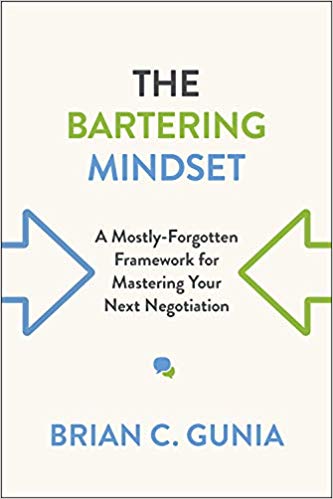
The Bartering Mindset: A Mostly Forgotten Framework for Mastering Your Next Negotiation
by Brian Gunia
Brian Gunia is an expert on negotiating, and he does something unusual here: he offers insights about bargaining that are both novel and useful.

Goliath’s Revenge: How Established Companies Turn the Tables on Digital Disruptors
by Todd Hewlin, Scott A. Snyder
Will your business be disrupted? Definitely. Do the disruptors have to be a small band of hackers in a garage? Definitely not. This book is full of practical tips for big companies to get a leg up on scrappy startups.

Blueprint: The Evolutionary Origins of a Good Society
It’s rare for a physician to become a prominent social scientist. It’s even rarer for that person to write a book that opens your eyes to a fresh way of understanding the world. Blueprint is a contrarian exploration of how good societies may be shaped less by historical forces and more by natural selection.
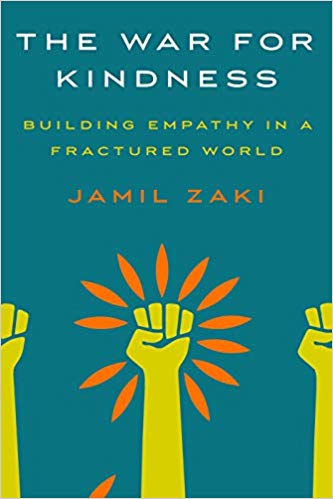
The War for Kindness: Building Empathy in a Fractured World
by Jamil Zaki
In a time when it seems empathy is a lost cause and compassion is a dying art, it may not be too late to revive the better angels of our nature. Jamil Zaki is one of the bright lights in psychology, and in this gripping… Read the full quote
In a time when it seems empathy is a lost cause and compassion is a dying art, it may not be too late to revive the better angels of our nature. Jamil Zaki is one of the bright lights in psychology, and in this gripping book he shows that kindness is not a sign of weakness but a source of strength.