Best Technical Books: 36 Picks Recommended by CEOs
Deep Learning by Ian Goodfellow, Yoshua Bengio and Aaron Courville leads the list, building from linear algebra and probability up to the neural network methods used in industry. Structure and Interpretation of Computer Programs by Harold Abelson and Gerald Jay Sussman, MIT’s Wizard Book, teaches recursion, abstraction and how interpreters work. Mastering Bitcoin by Andreas M. Antonopoulos gives developers the cryptography behind keys, wallets and transactions.
The list is for founders, engineers and self-taught builders who want to get their hands dirty rather than read about technology from a distance. Most of the core books are manuals and textbooks that expect the reader to work: language tutorials for Ruby, Haskell, Scala and JavaScript, Kernighan and Pike on Unix, Martin Fowler on refactoring, cryptography references from Bruce Schneier and Jean-Philippe Aumasson, and Sebastian Raschka’s guide to coding a language model. Engineering gets its share too, with press brake tooling, wood and timber frame construction, the residential building code and graduate texts on information theory and probability.
The related tier holds books that explain technology to general readers, such as Brian W. Kernighan’s tour of the digital world and Randall Munroe’s simple-word diagrams, along with books on the process side of technical work, from Frederick P. Brooks Jr. on software projects to Scrum and agile security.
We ranked these 36 books by how many of the 1,088 founders, CEOs and leaders on The CEO Library recommend them: first the 27 books mainly about technology and engineering skills, then 9 related books under Also worth reading.
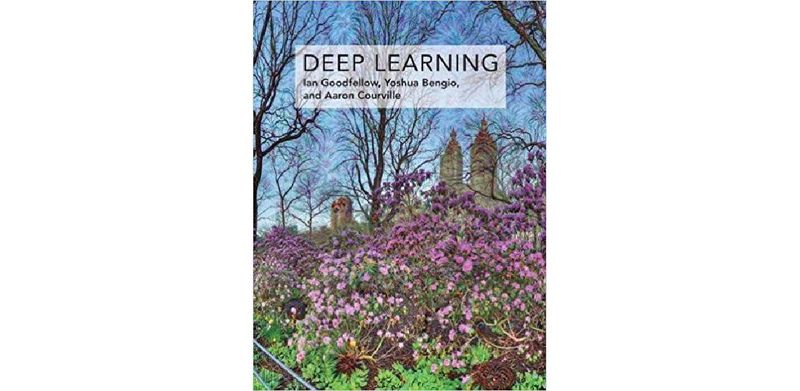
1. Deep Learning
by Ian Goodfellow, Yoshua Bengio, Aaron Courville
Recommended by 3 leaders: Elon Musk, Satya Nadella and Nassim Nicholas Taleb
Ian Goodfellow, Yoshua Bengio and Aaron Courville start with linear algebra, probability and numerical computation, then teach the deep learning methods used in industry, from convolutional networks to sequence models. Elon Musk calls it the one comprehensive book on the subject, and Nassim Nicholas Taleb praises its clear math.
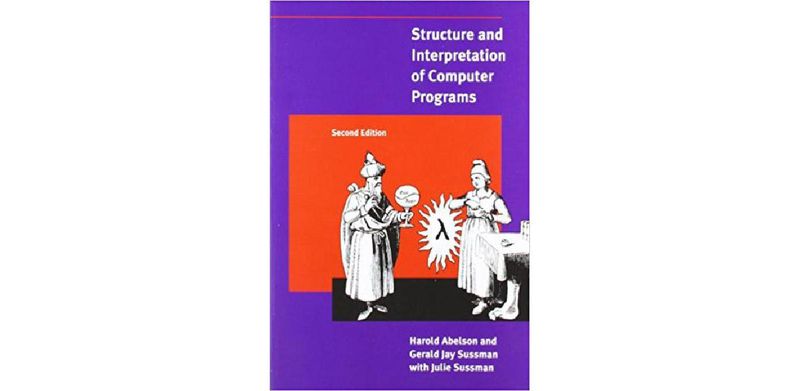
2. Structure and Interpretation of Computer Programs
by Harold Abelson, Gerald Jay Sussman
Recommended by 2 leaders: Patrick Collison and Santiago Basulto
Harold Abelson and Gerald Jay Sussman’s MIT textbook teaches programming fundamentals in Scheme: recursion, abstraction, modularity and finally the interpreters and compilers that run languages. Patrick Collison lists it, and Santiago Basulto calls it the place to start on fundamentals.
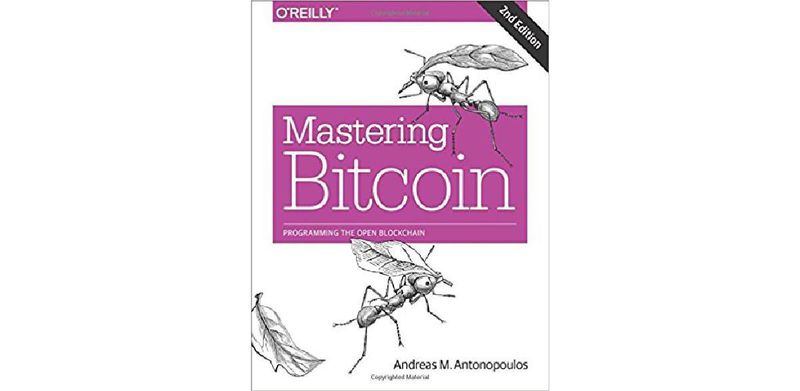
3. Mastering Bitcoin: Programming the Open Blockchain
Recommended by 2 leaders: Auston Bunsen and Hong Qi Yu
Andreas M. Antonopoulos gives developers and engineers the cryptographic and technical foundations of bitcoin, including keys, addresses, wallets, transactions and the peer-to-peer network, with code snippets throughout. Auston Bunsen relied on its detailed chapter on wallet addresses for his company’s work.
4. Build a Large Language Model (From Scratch)
Recommended by 1 leader: Lex Fridman
Sebastian Raschka has readers code a large language model without LLM libraries, first a base model, then a text classifier, then a chatbot that follows instructions, all running on a laptop and assuming intermediate Python. Lex Fridman recommends it to beginners and experts alike.
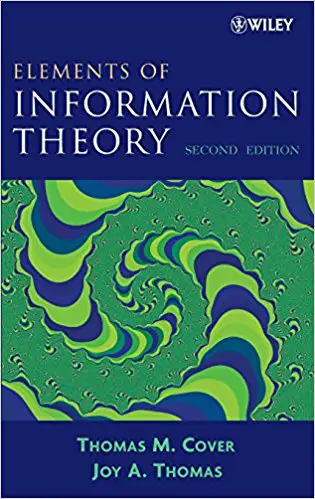
5. Elements of Information Theory
by Thomas M. Cover, Joy A. Thomas
Recommended by 1 leader: Eric Weinstein
Thomas M. Cover and Joy A. Thomas teach information theory through mathematics, physics and statistics, covering entropy, data compression, channel capacity and rate distortion, with problem sets closing each chapter. Eric Weinstein has it on his list.
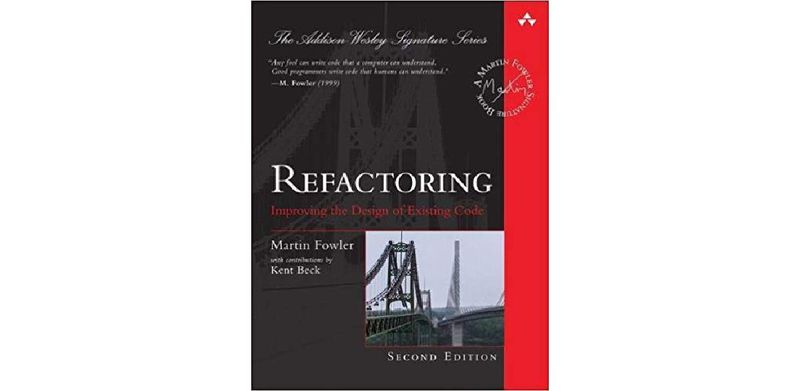
6. Refactoring: Improving the Design of Existing Code (2nd Edition)
Recommended by 1 leader: David Heinemeier Hansson
Martin Fowler catalogs refactorings, each with motivation, mechanics and examples, and shows how to detect code smells and back changes with tests, now with JavaScript samples. David Heinemeier Hansson returns to it again and again, one of just two programming titles he rereads.
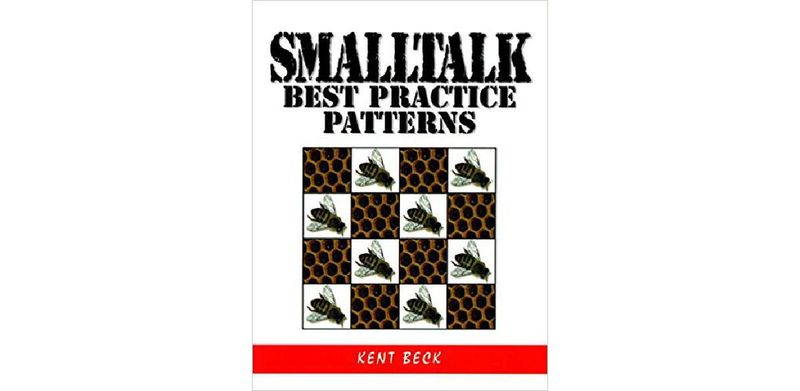
7. Smalltalk Best Practice Patterns
by Kent Beck
Recommended by 1 leader: David Heinemeier Hansson
Kent Beck writes down as named patterns the Smalltalk habits that seasoned developers tend to learn by trial and error, covering methods, messages, state, collections and formatting. David Heinemeier Hansson names it the programming book he loves most, still relevant after two decades.
8. Paradigms of Artificial Intelligence Programming
by Peter Norvig
Recommended by 1 leader: Patrick Collison
Peter Norvig teaches advanced Common Lisp by rebuilding real artificial intelligence programs, with chapters on debugging, efficiency and object-oriented programming aimed at building large, robust software. Patrick Collison has it on his bookshelf list.
9. The Unix Programming Environment
by Brian W. Kernighan, Rob Pike
Recommended by 1 leader: Tim O'Reilly
Brian W. Kernighan and Rob Pike teach Unix from the shell and file system through grep, sed, AWK and make to writing C programs and building a small language with yacc. Tim O’Reilly admired both its tools philosophy and the clarity of its prose.
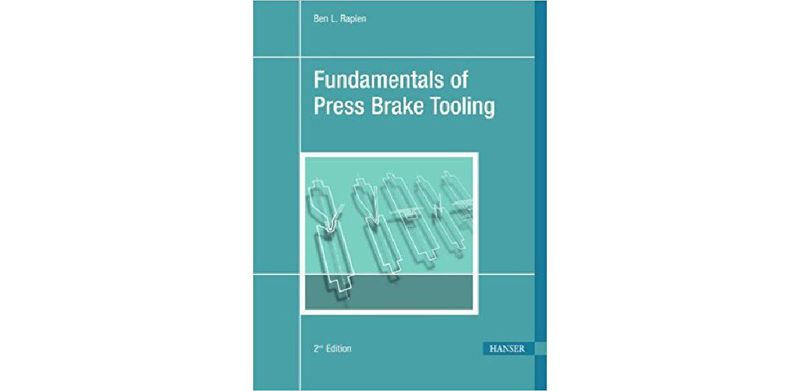
10. Fundamentals of Press Brake Tooling
by Ben Rapien
Recommended by 1 leader: Carl Bass
Ben Rapien distills 45 years with press brake tooling into a practical guide to forming sheet metal: choosing tools, checking machine requirements, calculating blank sizes and planning bend sequences, with the engineering simplified for operators. Carl Bass has recommended it.
11. 2018 International Residential Code for One- and Two-Family Dwellings
Recommended by 1 leader: Alan Pierce
The International Code Council spells out the technical rules for structure, plumbing, mechanical systems, fuel gas and electrical installations in houses and townhouses, down to seismic maps and header tables. Alan Pierce uses it for an overall grasp of modern Western building.
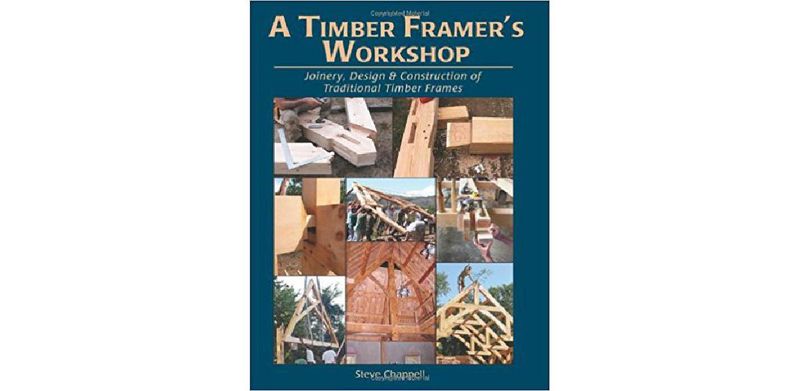
12. A Timber Framer’s Workshop: Joinery, Design & Construction of Traditional Timber Frames
Recommended by 1 leader: Alan Pierce
Steve Chappell’s workshop manual teaches the joinery, design and construction of traditional timber frames built on pegged mortise and tenon joints, with engineering specifications updated from new test data. Alan Pierce values it for rare joinery techniques behind houses that lasted centuries.
13. Applied Cryptography: Protocols, Algorithms and Source Code in C
Recommended by 1 leader: Dominic Steil
Bruce Schneier’s reference takes programmers from cryptographic protocols and techniques to the inner workings of algorithms such as RSA and DES, with source code in C and advice on random numbers and key security. Dominic Steil recommends it.
14. Bitcoin and Cryptocurrency Technologies: A Comprehensive Introduction
by Arvind Narayanan, Joseph Bonneau, Edward Felten, Andrew Miller
Recommended by 1 leader: Antonio Eram
Arvind Narayanan and three co-authors lay the groundwork for engineering secure software on the Bitcoin network, covering mining, security and anonymity, with lecture slides and programming assignments online. Antonio Eram named it among his current reads.
15. Code Complete: A Practical Handbook of Software Construction
Recommended by 1 leader: Santiago Basulto
Steve McConnell’s handbook on software construction gathers practical technique for coding, debugging, unit testing and integration, from naming variables to deciding when a subroutine pays off. Santiago Basulto places it beside SICP as a starting point for programmers moving into business.
16. Code Craft: The Practice of Writing Excellent Code
Recommended by 1 leader: Lewis Smith
Pete Goodliffe’s guide centers on the daily practice of writing excellent code, as its subtitle states, rather than on any single language. Lewis Smith, a developer, describes it as the quickest way for a junior programmer to become a senior one.
17. Graphic Guide to Frame Construction
by Rob Thallon
Recommended by 1 leader: Alan Pierce
Rob Thallon’s visual handbook shows the hands-on detail of building a wood frame house, with drawings covering foundations, subfloors, wall framing, roof flashing and stairs, plus advanced framing and moisture control. Alan Pierce recommends it to anyone starting in construction or engineering.
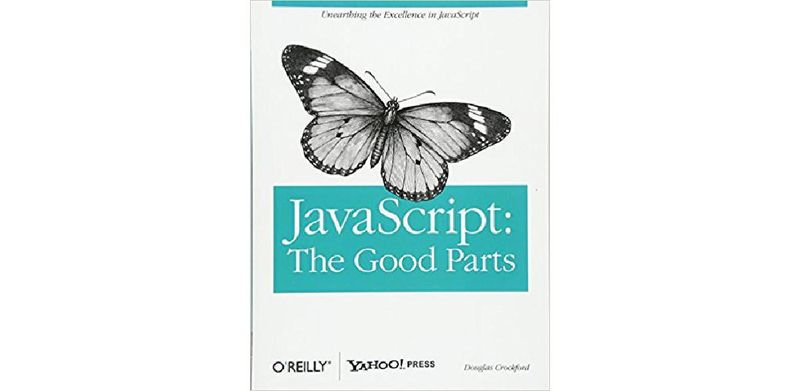
18. JavaScript: The Good Parts
Recommended by 1 leader: Auston Bunsen
Douglas Crockford, who specified the JSON format, trims JavaScript down to a dependable subset, covering objects, functions, inheritance, arrays and regular expressions while flagging traps such as a model built on global variables. Auston Bunsen recommends it.
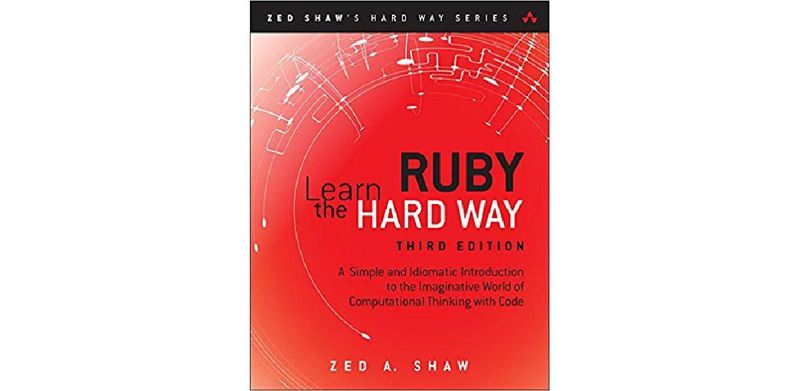
19. Learn Ruby the Hard Way: A Simple and Idiomatic Introduction to the Imaginative World Of Computational Thinking with Code
by Zed A. Shaw
Recommended by 1 leader: Auston Bunsen
Zed A. Shaw’s beginner course in Ruby runs through 52 exercises, each typed out by hand and debugged by the reader, building up from variables and loops to objects, automated testing and simple web programs. Auston Bunsen recommends it.
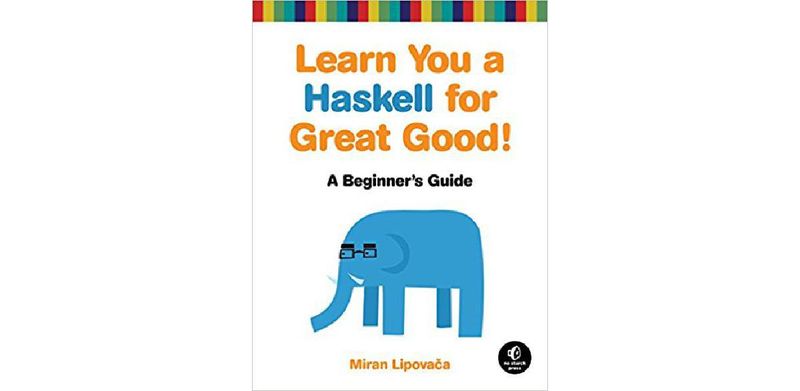
20. Learn You a Haskell for Great Good!
Recommended by 1 leader: Santiago Basulto
Miran Lipovača teaches Haskell, a demanding functional language, through drawings and jokes, starting with syntax, recursion and types and climbing to monads, applicative functors and zippers. Santiago Basulto enjoys it for the concepts, though Haskell is not part of his daily work.
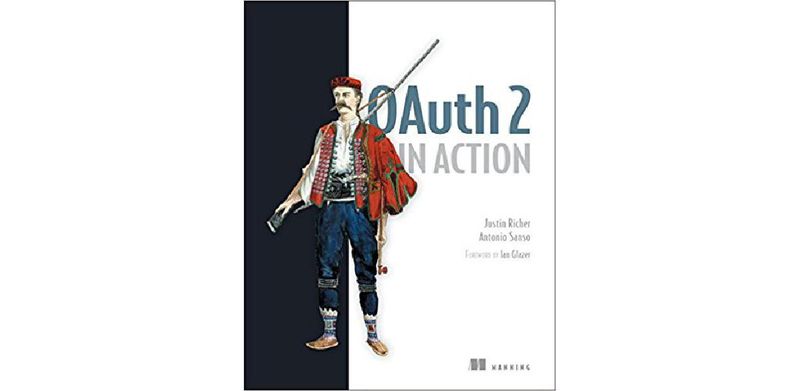
21. OAuth 2 in Action
by Justin Richer, Antonio Sanso
Recommended by 1 leader: Louis Nyffenegger
Justin Richer and Antonio Sanso teach OAuth 2 by having readers build a client, an authorization server and a protected resource, then cover tokens, OpenID Connect, common vulnerabilities and securing REST APIs, assuming basic programming plus HTTP and JSON. Louis Nyffenegger recommends it.
22. PHP and MySQL Web Development
by Luke Welling, Laura Thomson
Recommended by 1 leader: Scott Johnson
Luke Welling and Laura Thomson teach database backed web development with PHP and MySQL, ending with full projects such as a shopping cart and user authentication. Scott Johnson credits it with teaching him the craft when a software engineering job arrived after the dot com crash.
23. Programming in Scala
by Martin Odersky, Lex Spoon, Bill Venners
Recommended by 1 leader: Santiago Basulto
Martin Odersky, who designed Scala, teaches the language one stage at a time with Lex Spoon and Bill Venners, moving from its basic elements to functional programming on the Java Virtual Machine and advanced features. Santiago Basulto values the concepts behind it even without daily Scala work.
24. Programming Pearls
by Jon Bentley
Recommended by 1 leader: James Stanley
Jon Bentley builds each essay around a small, nagging problem from real programming work and solves it with care for design and machine resources. James Stanley found many moments of sudden insight in its well-defined problems and efficient solutions.
25. Serious Cryptography: A Practical Introduction to Modern Encryption
Recommended by 1 leader: Louis Nyffenegger
Jean-Philippe Aumasson explains modern encryption in technical detail, from hash functions, block ciphers and randomness to RSA, elliptic curves and TLS, and every chapter shows common implementation errors with code samples. Louis Nyffenegger recommends it.
26. Probability, Random Variables and Stochastic Processes
by Athanasios Papoulis, S. Unnikrishna Pillai
Recommended by 1 leader: Nassim Nicholas Taleb
Athanasios Papoulis and S. Unnikrishna Pillai’s graduate textbook develops probability theory and random processes deductively, with applications for electrical engineers. Nassim Nicholas Taleb suggests it to nonmathematicians starting in probability and uses it as a desk reference.
27. The Elements of Statistical Learning: Data Mining, Inference, and Prediction
by Trevor Hastie, Robert Tibshirani, Jerome Friedman
Recommended by 1 leader: Nassim Nicholas Taleb
Trevor Hastie, Robert Tibshirani and Jerome Friedman set machine learning inside a statistical framework, covering supervised and unsupervised methods from boosting and support vector machines to random forests and the lasso. Nassim Nicholas Taleb uses it as a reference and keeps two copies.
Also worth reading
28. The Mythical Man-Month: Essays on Software Engineering
Recommended by 1 leader: Jeff Bezos
Frederick P. Brooks Jr. covers the management side of technical work, drawing on IBM’s System/360 to explain why adding programmers to a late project slows it, plus the second-system effect and prototyping. Jeff Bezos has recommended it.
29. Structures: Or Why Things Don’t Fall Down
by J.E. Gordon
Recommended by 1 leader: Elon Musk
J.E. Gordon introduces structural engineering for general readers, explaining in plain, witty prose why buildings, bridges and dams keep standing. It is a primer rather than a manual, and Elon Musk calls it very good for learning structural design.
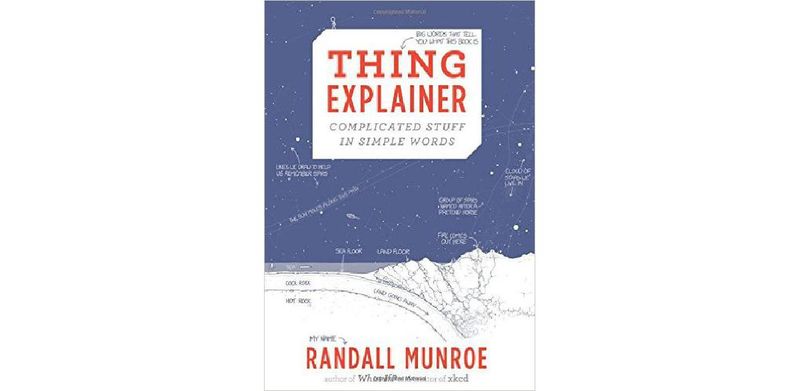
30. Thing Explainer: Complicated Stuff in Simple Words
Recommended by 1 leader: Bill Gates
With stick-figure drawings and only the thousand most common words, Randall Munroe shows how 54 machines and natural systems work, from microwave ovens to helicopters, an entry point to technical subjects rather than a manual. Bill Gates hopes its drawings send readers off to learn more.
31. Agile Application Security: Enabling Security in a Continuous Delivery Pipeline
by Laura Bell, Michael Brunton-Spall, Rich Smith, Jim Bird
Recommended by 1 leader: Louis Nyffenegger
Four security and agile practitioners, Laura Bell among them, focus mainly on process: fitting security into agile and continuous delivery, with security testing in every release and compliance in DevOps teams. Louis Nyffenegger recommends it.
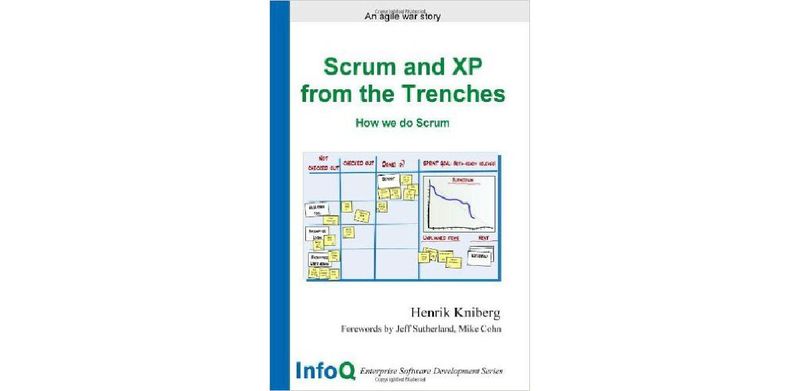
32. Scrum and XP from the Trenches
Recommended by 1 leader: Mircea Scarlatescu
Henrik Kniberg describes how a Swedish company of about 40 people adopted Scrum and mixed in XP habits like pair programming and test-driven development, with tips on backlogs, estimation, demos and testing. Mircea Scarlatescu recommends it.
33. Succeeding with Agile: Software Development Using Scrum
by Mike Cohn
Recommended by 1 leader: Nicolae Andronic
Mike Cohn’s guide is about software process more than code, showing teams how to adopt Scrum and keep it working, from team structure and scaling to metrics and distributed teams. Nicolae Andronic recommends it for building products in an organized way.
34. Web Analytics 2.0
Recommended by 1 leader: Raluca Radu
Avinash Kaushik’s follow-up is a framework for web analytics, mainly aimed at making organizations data driven, with practical advice on analytical techniques, measuring social and multichannel campaigns, and running experiments. Raluca Radu recommends it alongside his earlier book.
35. Web Analytics: An Hour A Day
Recommended by 1 leader: Raluca Radu
Avinash Kaushik’s book is mainly about web analytics strategy for marketers, but its week-by-week program teaches hands-on skills, from core metrics and internal search reports to paid search, email measurement and testing, plus choosing tools and tags. Raluca Radu recommends it.
36. Understanding the Digital World
Recommended by 1 leader: Eric Schmidt
Brian W. Kernighan writes for readers with no technical background, explaining how hardware, software, networks and the web work, what programming is, and the privacy and security risks involved. Eric Schmidt calls it the clearest, simplest explanation of the digital world.