Home › Collections › Best Travel Books: Because You WILL Travel a Lot
Best Travel Books: Because You WILL Travel a Lot
I’ve never thought that one of the things I’ll do a lot once I start my own business is travel. I thought I would be stuck in an office, growing my online empire, but that was so far from the truth. At some point, while I was building my company, I travel 5 months in a year: I went to trade show, expos, conferences, all to promote our work and get more contacts in the industry.
Truth is, though, that with the best travel books, you can explore some of the world’s most incredible places without ever having to leave your home. Whether you don’t have the funds to take a fantastic trip or you’re planning a future getaway, you’ll easily be able to pick the perfect destination for your time away. Filled with plenty of pictures and informative blurbs about unique destinations and popular tourist attractions, your travels will be far more interesting.
For me it wasn’t about not traveling, but about adding a little bit of fun to a business trip. I looked in advance for things to do or see and I usually got one more day at the destination (if possible) and I got to enjoy some places I would never have gone to otherwise.
What we have come to love about travel books the most is that they help to educate you about specific areas in the world. You’ll be able to delve into unique cultures, learn about native species, as well as the different environments that we are surrounded by. You would be surprised at how much you can learn about your local area if you were to invest in some of the best travel books.
There is so much to experience in the world, and with the insanely vibrant imagery in these books, it will feel like you’re traveling without having to spend thousands. From destinations, such as Fiji, to the Amazon, there is an extensive number of places that you can experience simply by flipping through the pages. Travelers will especially love these books, as they can help you to pinpoint unique destinations that you may have never thought of before.
During your time away from home, consider picking up some of the best travel books in the area you’re visiting! You might find yourself reinventing your itinerary so that you can have more amazing experiences that are indeed one of a kind.
By the end of your trip, you can guarantee you will have an assortment of unique picturesque moments, so you can show off your amazing travels and soak in everyone’s envy.
It’s easy to see how so many people have wanderlust to see things outside of what they’re faced with every day. Surely consider some of the best travel books for an exceptional experience you aren’t soon to forget.
Best Travel Books
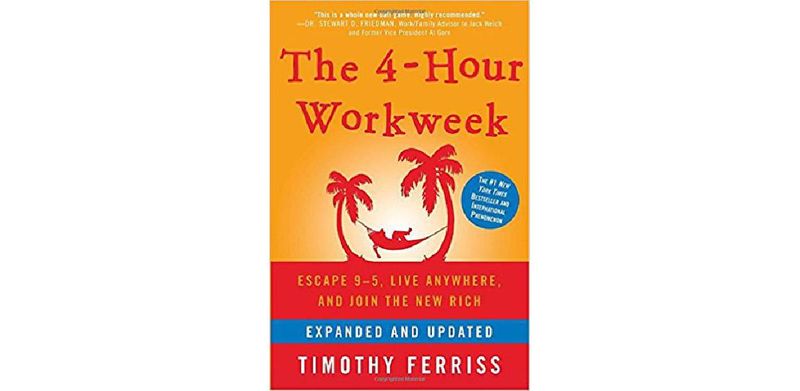
The 4-Hour Workweek: Escape 9-5, Live Anywhere, and Join the New Rich
by Tim Ferriss
Here are some of the guests and some of their books, in no particular order. I recommend all of the below books. If I didn't like a book, I wouldn't have them on the show.
Founder/StockPickr
The Hard Thing About Hard Things: Building a Business When There Are No Easy Answers
by Ben Horowitz
I read this book at a time when Udemy was rapidly growing—over the 18 months where we went from 30 to 200 people. It was helpful to read about Horowitz's challenges, worries, and triumphs when addressing the same types of issues at a similar stage of growth. There are so many big decisions you need to make where there's just no clear-cut, right or wrong answer. There are a lot of gray areas. You gather information from your team, but the hard decisions rest with you. This book helped me realize that while I needed to carefully and objectively consider feedback, I was responsible for making a decision in the end—even when it was an unpopular one.
CEO/Udemy
The Alchemist
by Paulo Coelho
Recommended by Ola Olusoga (Co-founder/Populum)
Source: Interview with Ola Olusoga: How Books Have Guided His Path To Self-Discovery
Everything Is Figureoutable
by Marie Forleo
Millions of young women look to Marie Forleo as their inspiration for empowerment and achievement.
CEO/Oprah Winfrey Network
Losing My Virginity
I encourage you to read his autobiography “Losing My Virginity” as well as his book “Business Stripped Bare” if you haven’t gone through them yet. Uber-inspiring. For people who want to become Remarkable Entrepreneurs – and express their absolute best.
Founder/Sharma Leadership International
Tao Te Ching
by Lao Tzu
According to a Yibada interview with Chen Wei, who wrote Ma’s 2014 authorized biography, the Alibaba founder and executive chairman always carries the Tao Te Ching, the foundational text of Taoist philosophy, religion and ethics composed by Lao Tzu in the sixth century B.C.
Founder/Alibaba
Quit Like a Millionaire: No Gimmicks, Luck, or Trust Fund Required
This book wants you to be rich: in money, in time, and in life. You have come to the right place. Kristy and Bryce take you through the process step by step, with actionable things that you can do no matter what your age, location, background, or education.
Author
How to Change Your Mind: What the New Science of Psychedelics Teaches Us About Consciousness, Dying, Addiction, Depression, and Transcendence
Michael Pollan masterfully guides us through the highs, lows, and highs again of psychedelic drugs. How to Change Your mind chronicles how it’s been a longer and stranger trip than most any of us knew.
Author
SPIN Selling
by Neil Rackham
The other book on selling is an oldie but goldie, never goes away: SPIN Selling, by Neil Rackham. It's the one when a founder is trying to learn how to sell, belly to belly, I tell them to check out Spin Selling.
CRO/Hubspot
The Moment of Lift: How Empowering Women Changes the World
Melinda Gates's book is a lesson in listening. A powerful, poignant, and ultimately humble call to arms.
Author
The Geography of Genius: A Search for the World’s Most Creative Places from Ancient Athens to Silicon Valley
by Eric Weiner
The book just a great job describing how communities through the world and history were able to be more innovative than others. It contains some big surprises too.
CEO/CCKPartners
Hacking Growth: How Today’s Fastest-Growing Companies Drive Breakout Success
The book is new (2017) and growthhacking is a real trend right now.
Head of Marketing/Y-Productive
The Hobbit
Recommended by Richard Branson (Founder/Virgin Group)
Your Brain at Work: Strategies for Overcoming Distraction, Regaining Focus, and Working Smarter All Day Long
by David Rock
Understand how our brains operate at work throughout the day was really illuminating for me, especially because I manage other humans who have brains.
CEO/Lucid
The Rise and Fall of American Growth: The U.S. Standard of Living since the Civil War
The Rise and Fall of American Growth: The U.S. Standard of Living since the Civil War: This book was a grind, but it had a lot of good stuff in it. It’s only 784 pages so it took more than a day to read it. If you are trying to understand what is going on in the current American economy, and why the future will not look like the past, this is a good place to start.
Co-Founder/Foundry Group
Contact
by Carl Sagan
[Currently reading] Contact, by Carl Sagan. Not expecting to gain anything...I just love scifi books.
Partner/PROfounders Capital
The Upstarts: How Uber, Airbnb, and the Killer Companies of the New Silicon Valley Are Changing the World
by Brad Stone
Recommended by Craig Pearce (Co-Founder/Kid Genius)
Source: Interview with Craig Pearce
The Box: How the Shipping Container Made the World Smaller and the World Economy Bigger
You might think you don’t want to read a whole book about shipping containers. And Levinson is pretty self-aware about what an unusual topic he chose. But he makes a good case that the move to containerized shipping had an enormous impact on the global economy and changed the way the world does business. And he turns it into a very readable narrative. I won’t look at a cargo ship in quite the same way again.
CEO/Microsoft
In the Heart of the Sea: The Tragedy of the Whaleship Essex
Wow, did you know that Moby Dick was based on a true story? There was a real whaling ship that was broken in half by an angry sperm whale. But it gets even more insane. The members of the crew escaped in three lifeboats, traveling thousands of miles at sea with little food and water until they slowly resorted to cannibalism(!) Besides being an utterly unbelievable story, this book also gives a great history into the whaling industry and the cowboys/entrepreneurs who led it. Definitely recommend and I promise my spoilers did not ruin anything.
Founder/Brass Check
Brain Rules: 12 Principles of Surviving and Thriving at Work, Home and School
by John Medina
Recommended by Tudor Teodorescu (Founder/Transylvania Uncharted)
A Short History of Nearly Everything
by Bill Bryson
Recommended by Fabrice Grinda (Serial Entrepreneur, Investor)
Source: Serial Entrepreneur & Investor Fabrice Grinda Reads Almost 100 Books Each Year
The Windup Girl
Novels: The Windup Girl and Pattern Recognition are chock full of images and ideas that will stick with you for months.
Author & Entrepreneur
Musashi
I bought this book at Kinokuniya bookstore in Shinjuku, Tokyo. It is as thick as a Harry Potter book, probably thicker, but the pages are as thin as onion skin. It’s a serious tome. I never expected to finish it, and I tore through it in less than two weeks.
If you’re like me and enjoy a good Samurai story – the wandering ronin, epic battle scenes with lots of penetrating (wisdom), then you’ll love Eiji Yoshikawa’s Musashi. It’s sold more than 100 million copies in Japanese. Musashi’s transformation from talented yet conflicted young warrior to one of the greatest (perhaps the greatest) swordsman of all time teaches you about critical thinking, strategizing, and ultimately, that there is more to life than merely surviving. Musashi re-created himself from nothing and rose from destitution to legend.
Author & Entrepreneur
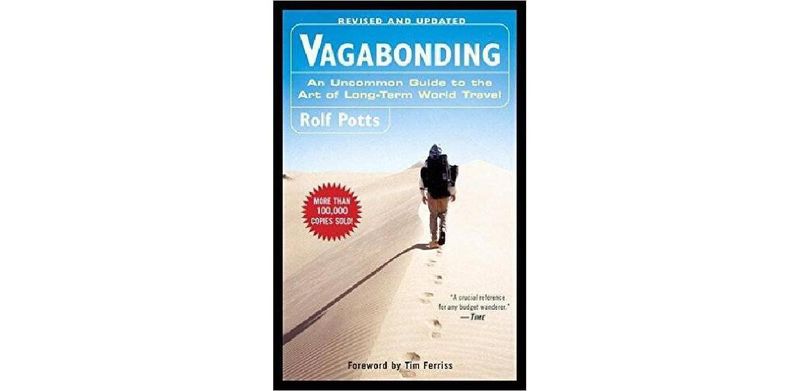
Vagabonding: An Uncommon Guide to the Art of Long-Term World Travel
by Rolf Potts
Travel is something we've found to crave and seek out within the team, and the fact we're set up as a distributed team gives us all a lot of freedom to explore the world. Vagabonding is one of the best books out there to think about travel in a whole new way. Rather than going to places for just a few days and cramming in seeing all the sights, it suggests that if we can we should spend weeks or months rather than days in a place. That way we can get to know the culture and people or even become part of it.
Co-founder/Buffer
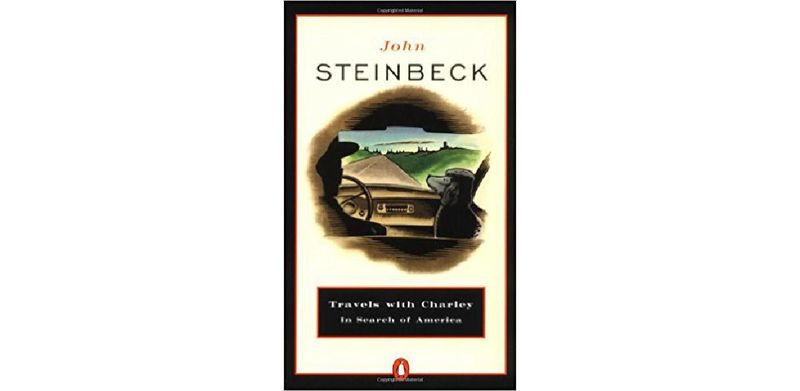
Travels with Charley in Search of America
I wanted to include an older book that has been on my bookshelves for decades, and is a less obvious example of reading to lead. John Steinbeck took a road trip with his dog Charley for company across the length and breadth of the US, and recorded what he saw, who he met and what he learned.
With his inimitable charm, it opens your eyes to the small pleasures of life, and the great wonders of humanity in the little moments that matter. Less a direction on how to lead, you could see it as a subtle guide on how to live.
Founder/Virgin Group
Gulliver’s Travels
Which books should be read by every single intelligent person on planet? [...] Gulliver's Travels (Swift) [to learn, among other satirical lessons, that most of the time humans are Yahoos]. If you read all of the above works you will glean profound insight into most of what has driven the history of the western world.
Astrophysicist, Author & Science Communicator
The World Until Yesterday: What Can We Learn from Traditional Societies?
It’s not as good as Diamond’s Guns, Germs, and Steel. But then, few books are. Diamond finds fascinating anecdotes about what life is like for hunter-gatherers and asks which ones might apply to our modern lifestyles. He doesn’t make some grand pronouncement or romanticize tribal life. He just wants to find the best practices and share them.
CEO/Microsoft
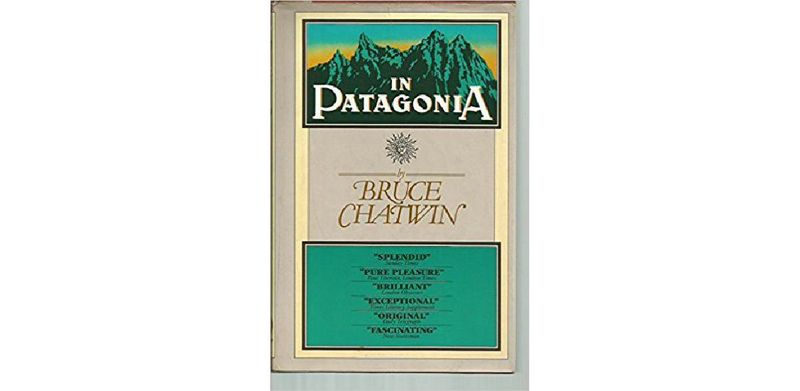
In Patagonia
Recommended by Richard Branson (Founder/Virgin Group)
The Elephant in the Room: One Fat Man’s Quest to Get Smaller in a Growing America
Recommended by The CEO Library Community (through anonymous form) (Reader)
Source: The CEO Library readers
Flow: The Psychology of Optimal Experience
While re-reading Mihaly Csikszentmihalyi’s wonderful book Flow: The Psychology of Optimal Experience, I came across this passage on working crossword puzzles. I think he could just as well be talking about making blackout poems:
"There is much to be said in favor of this popular pastime, which in its best form resembles the ancient riddle contests. It is inexpensive and portable, its challenges can be finely graduated so that both novices and experts can enjoy it, and its solution produces a sense of pleasing order that gives one a satisfying feeling of accomplishment. It provides opportunities to experience a mild state of flow to many people who are stranded in airport lounges, who travel on commuter trains, or who are simply whiling away Sunday mornings."
Author/Steal Like an Artist
Peak: How Great Companies Get Their Mojo from Maslow
by Chip Conley
Rarely has a CEO bared his soul in a book...this powerfully authentic story and the resulting emotional building blocks that define how we can understand our internal weather make for a compelling read and an invaluable operating manual for life.
CEO/Zappos
Damn Right: Behind the Scenes with Berkshire Hathaway Billionaire Charlie Munger
by Janet Lowe
I’m a huge Charlie Munger fan. For some reason, I’d missed this biography of him. I learned a few things I didn’t know and got to travel back in time to a book written in the context of Charlie Munger about 20 years ago.
Co-Founder/Foundry Group
Memoirs of Sergeant Bourgogne
There’s this book I really really enjoyed: The memoirs of Sergeant Bourgogne. I would have never even heard about it had I not asked someone for an odd recommendation. It’s raw, the edition is poor or lacking, but your imagination covers for it. The story is so detailed and crude that I still don’t understand why there isn’t a movie about it!
Founder/everydayCheck
Arbitrary Stupid Goal
Certainly my favorite book cover of the year, the graphic designer’s memoir drops you right into a kid’s eye view of 1970s Greenwich Village. With it’s chunked sections and hand-drawn illustrations, it gave me the same kind of quick, skippy joy I get when reading Vonnegut.
Writer, artist
Physics of the Future: How Science Will Shape Human Destiny and Our Daily Lives by the Year 2100
by Michio Kaku
Kaku interviews some of the world's best and brightest scientists to find out what they're working on. What he unveils is a future of sci-fi-like innovations and breakthroughs worth sticking around for.
CEO/Dell
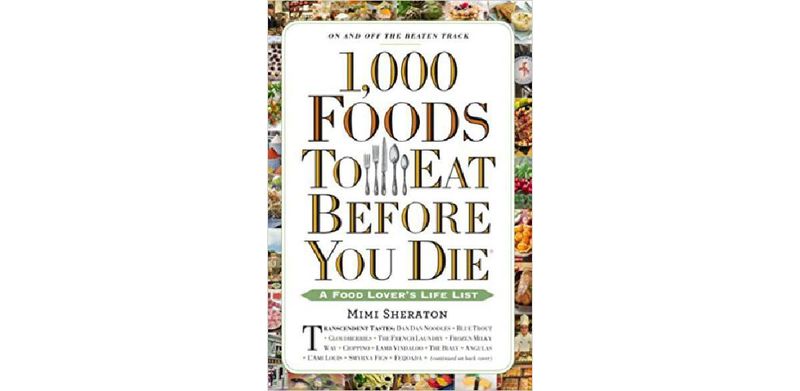
1,000 Foods To Eat Before You Die: A Food Lover’s Life List
If one is to name the single most knowledgeable person about food on planet Earth, it would be Mimi Sheraton. She is also --by far-- the most experienced food critic in an area where experience matters the most, a field in which the expert is the expert.
She has an insatiable curiosity, does her homework, visits countries, argues with locals, tries all manner of restaurants, and is never fooled by hot air or pseudosophistication. I have seen it with my own eyes. Over the past 34 years i watched her in action, particularly when after my graduation, I would go order for her in restaurants so the food would get to the table before the waiters recognized her. She did not use her priviledge as a food critic to get the better quality food and service than the rest of the people --a testament of both ethics and curiosity.
As I said she is the real thing; this book is the real book.
Flaneur
Draft No. 4: On the Writing Process
by John McPhee
My current obsession is John McPhee. He's a creative nonfiction wizard, and as soon as I got my hands on Draft No. 4, where he explains quite vividly how he chooses the structure of his stories, I was hooked. He even mentions creating an entire article based on a spiral-like diagram structure, before even starting to actually write the piece.
Food Styling and Photography Blogger
Mapping the Mind
by Rita Carter
I started my interest in neurobiology in December 1998 after reading a discussion by Rita Carter in the FT showing that rational behavior under uncertainty and rational decision making can come from a defect in the amygdala. Since then I've had five years of reading more technical material (Gazzaniga et al is perhaps the most complete reference on cognitive neuroscience) and thought that I transcended this book.
But it was not so. I picked up this book again last weekend and was both astonished at a) the ease of reading , b) the clarity of the text and c) the breadth of the approach! I was looking for a refresher as I am trying to capture a general idea of the functioning of that black box and found exactly what I needed without the excess burden of prominent textbooks. Very pedagogical.
I read here and there comments by neuroscientists dissing the book over small details perhaps invisible even to experts. I just realize that Carter should keep updating it, as it is invaluable in my suitcase when I travel! I do not conceal my suspicion of "science writers" and journalists more trained in communicating than understanding and usually shallow babblers but Carter is an exception. Perhaps the science of the mind requires breadth of knowledge that she has. She is a thinker in her own right not just a "medical journalist".
Flaneur
I, Asimov: A Memoir
by Isaac Asimov
In I, Asimov I’ve discovered a genuine happy person, someone that did what he loved his entire life. I discovered that one of the biggest authors of Science Fiction actually stopped writing fiction novels almost completely for 20 years. I discovered that he enjoyed writing mystery short stories a lot. And this shouldn’t surprise me since most of the books in his SF series are, actually, mysteries. Especially the Robots ones.
His autobiography reads like the archive of a blog, with anecdotes and short stories of the author’s life. It made me smile so often, I didn’t believe it. I was reading in bed and I would read out loud to my fiancée something that made me laugh loudly.
Besides the laughs, I also appreciated the power of Asimov’s convictions. I’m taking example, as well, since sometimes I forget to support my opinions as strongly as I should. If you enjoyed Asimov's books, you're gonna love this one.
Founder/the CEO Library
The Lost Colony (The Long Winter Trilogy Book 3)
by A.G. Riddle
On the non-fiction front, I love A.G. Riddle's works and I just finished his last book in the The Long Winter trilogy: The Lost Colony. I wanted to read it so much that I preordered the book and I put the day of launch in my calendar, 5-6 months ago, after reading the second book. The entire trilogy is an interesting take on time travel, actually, but it only makes sense in the final book, this one.
Founder/The CEO Library
The Space Barons: Elon Musk, Jeff Bezos, and the Quest to Colonize the Cosmos
The Space Barons by Christian Davenport, a Washington Post reporter, is an exciting narrative filled with colorful reporting and sharp insights. The book sparkles because of Davenport’s access to the main players and his talent for crisp storytelling.
Author
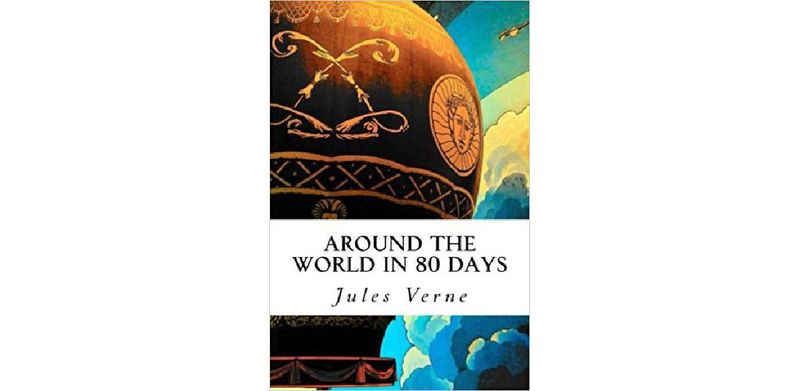
Around the World in 80 Days
by Jules Verne
Chronologically, my first favourite book probably was Jules Verne’s Around the World in Eighty Days.
Founder/We Are Play Lab
The Personality Brokers: The Strange History of Myers-Briggs and the Birth of Personality Testing
by Merve Emre
This is a sparkling biography—not just of a pair of remarkable women, but of a popular personality tool. Merve Emre deftly exposes the hidden origins of the MBTI and the seductive appeal and fatal flaws of personality types. Ultimately, she reveals that a sense of self is less something we discover, and more something we create and revise.
Author/Originals
Asylum
In 1934, William Seabrook was one of the most famous journalists in the world. He was also an alcoholic. But there was no treatment for his disease. So he checked himself into an insane asylum. There, from the perspective of a travel writer, he described his own journey through this strange and foreign place. Today, you can’t read a page in the book without seeing him bump, unknowingly, into the basic principles of 12-step groups and then thwarted by well meaning doctors (like the one who decides he’s cured and can start drinking again). On a regular basis, he says things so clear, so self-aware that you’re stunned an addict could have written it–shocked that this book isn’t a classic American text. Yet all his books are out of print and hard to find. Two of my copies are first editions from 1931 and 1942. It breaks your heart to know that just a few years or decades later, his options (and outcome) would have been so very different (he eventually died of an opium overdose).
Founder/Brass Check
My Berlin Child
Recommended by Irina Botnari (Managing Partner & Co-Founder/Bucur's Shelter Hostel)
Source: Irina Botnari, Co-Founder at Bucur's Shelter Hostel, on Books, Her Love for Stories and Biographies
Plato and a Platypus Walk into a Bar: Understanding Philosophy Through Jokes
by Thomas Cathcart, Daniel Klein
I read Plato and the Platypus by Umberto Eco, which I found brilliant and was sucked into buying this book thinking it was about the same problem of categories. But Philosophy this is not, or if it is, it is not deep enough to give satisfaction. This is like a brief drink in an airplane lounge with someone funny, smart, witty, but not too funny. So I would give it my lowest rating: 4 stars (as an author I can't give below that --I just would not review).
Would I buy it again? Perhaps, but only for a plane ride. It left me very very hungry for both jokes and philosophy.
Flaneur
Cosmic Consciousness: A Study in the Evolution of the Human Mind
Kottke recently shared a list of the books he and Jobs read around their time at Reed — ones that inspired Jobs's travels across the globe as well as his professional pursuits. One of the most influential works on that list is "Cosmic Consciousness: A Study in the Evolution of the Human Mind," originally published by a Canadian psychiatrist in 1901.
Founder/Apple
The Vanishing American Adult: Our Coming-of-Age Crisis–and How to Rebuild a Culture of Self-Reliance
by Ben Sasse
I read this book (note: The Gift of Failure) not long after reading Senator Sasse’s The Vanishing American Adult and found it to be a great companion. We forget that homework doesn’t matter, grades don’t matter—only what the process they represent matters. Children are not a reflection of their parents, they depend on their parents to raise them into adults who can be reflections of who they uniquely are.
Founder/Brass Check
Write It Down, Make It Happen: Knowing What You Want And Getting It
As for business books, my main profession is attorney-at-law, so i studied mainly juridical books. If we consider personal-developing books also in the business area my favorite book would have to be "Write It Down, Make It Happen" - Henriette Anne Klauser. It literally changed my life from the moment I have read it. The main idea from the book is to reflect well upon a desire/goal and if it suits you, and you really want it, write it down. After this you will make steps conscious or sub-conscious towards your target and it will happen. I did write a lot down and I did happen! Also in the recent years, after I changed my field of activity from law to yachting, every time I have a project - let's say buying few boats - I print an image with the boats and eventually we manage to get them.
Owner/Set Sail Nautic School
Pattern Recognition (Blue Ant)
Novels: The Windup Girl and Pattern Recognition are chock full of images and ideas that will stick with you for months.
Author & Entrepreneur
The Time Traveler’s Wife
Audrey Niffenegger's "The Time Traveler's Wife" and Garth Stein's "The Art Of Racing In The Rain" made me cry.
Founder/Readable
Beneath the Underdog: His World as Composed by Mingus
There are a couple of books that inspired me or gave ignition to a new thought process. In terms of biographies, I liked Charles Mingus - Beneath the Underdog.
CEO & Co-Founder/Lofelt
What is the What
by Dave Eggers
Recommended by Barack Obama (Former USA President)
Source: Every book Barack Obama has recommended during his presidency
You Say to Brick: The Life of Louis Kahn
by Wendy Lesser
The longer I look at architecture, the more I appreciate the genius of Louis Kahn, the designer of the Yale Art Gallery in New Haven, the Salk Institute in La Jolla and the Kimball Art Museum in Fort Worth. He was miraculously capable of creating bold, uncompromising spaces that are at once completely original and utterly comfortable. This book exposes the man and his work in a way that illuminates both.
Founder/Design Observer
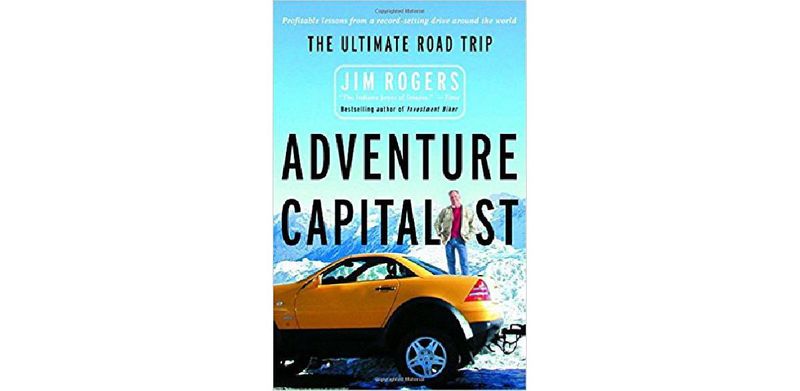
Street Smarts: Adventures on the Road and in the Markets
by Jim Rogers
Recommended by Marvin Liao (Partner/500 Startups)
Source: Book-Talk with Marvin Liao, Partner at 500 Startups, Avid Reader & Tsundoku
Heart of Darkness
Recommended by Barack Obama (Former USA President)
Source: Every book Barack Obama has recommended during his presidency
I’m Telling the Truth, but I’m Lying: Essays
by Bassey Ikpi
I’m Telling the Truth, but I’m Lying is a richness of layers, rewarding the reader no matter which particular thread got you here: the experience of being African-born and raised in America, the coming up of a gifted writer and performer, tracing the lineage of mental illness through several generations, or the fleshing out of the literal highs and lows of bipolar II. Like kudzu, symptoms blossom and lace themselves through Ikpi’s accomplishments and griefs, strangulating her from life’s sustenance (food, friends, sleep). Her vivid, heart-racing chapters on the living, breathing moments of bipolar, particularly ‘This is What Happens,’ will be assigned in coursework for years to come. Bassey Ikpi’s writing is a revelation, a thrill, devastating and uproarious, lively in its accurate depiction of the lack of boundaries between the terrible and the hilarious. I’m Telling the Truth is a feat, and will soon be the favorite book of many. It is already one of mine.
Founder/the Me Too Movement
Our True Intent Is All For Your Delight: The John Hinde Butlin’s Photographs
Recommended by Karen Pfaff Manganillo (Co-Founder/By Karen and Jess)
Source: Jessica Lauria and Karen Pfaff Manganillo, About the Reads that Inspired Them on Their Journey
Maxims and Reflections
I was traveling around the world at the age of 18, which is what people in England do between high school and university. In my coat, I had Goethe's aphorisms, his short little thoughts in my pocket. I read and reread this book... It's actually had quite a fundamental [impact] on my life because these are his little snipets of wisdom on almost any imaginable topic, and all of them are brilliant. There are things like, 'The company of women is schooling in good manners', or 'Boldness has genius, power and magic'. Ones you don't remember in their precise form, but which nonetheless act as little micro filters for interpreting reality.
CEO/Memorise
Anatomy of the Spirit: The Seven Stages of Power and Healing
Recommended by Tudor Teodorescu (Founder/Transylvania Uncharted)
The Player Of Games
This is a change of pace from all the recent social science books. Instead, it's a science fiction book about an advanced civilization with AI and a vibrant culture.
CEO/Facebook
100 Side Hustles: Unexpected Ideas for Making Extra Money Without Quitting Your Day Job
Chris Guillebeau often says, 'Inspiration is good, but inspiration combined with action is so much better,' and this collection of side hustles is an invaluable resource for both inspiration and action. It’s packed with practical and engaging ideas, tips, strategies, and, most helpful, real-life examples of people who have succeeded.
Author
The History of Rasselas, Prince of Abissinia
Rasselas, by Samuel Johnson. Johnson, author of the first major dictionary of the English language, is one of my heroes. His work can be considered an extended meditation on Milton's phrase from Paradise Lost: "The mind is its own place, and in itself can make a heaven of hell, a hell of heaven." The quote from Johnson I subject people to most often is from his short novel Rasselas, in which a character remarks something like this: "I consider the pyramids to be a monument to the insufficiency of all human enjoyments. He who has built for use till use is supplied must begin to build for vanity." The pyramids are actually quite a wonderful thing, but there's a lot of wisdom in this analysis. Johnson's work is a wonderful reminder that our minds have prodigious energy that must be focused on the right objects, and that much human pathology comes from having insufficient objects for our striving.
Founder/O'Reilly Media
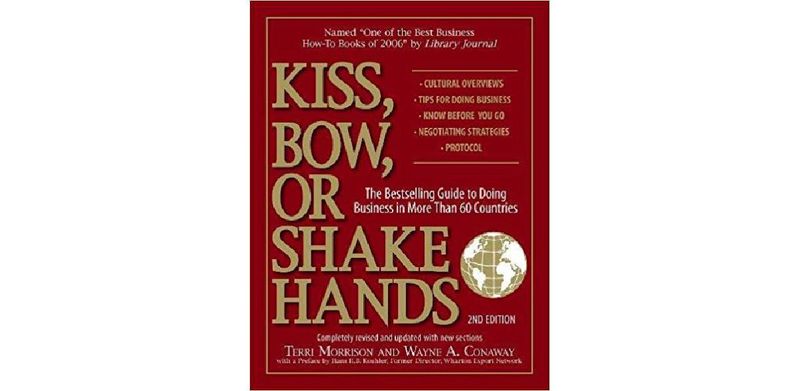
Kiss, Bow, Or Shake Hands: The Bestselling Guide to Doing Business in More Than 60 Countries
by Terri Morrison, Wayne A. Conaway
Recommended by Tudor Teodorescu (Founder/Transylvania Uncharted)
The Horse: The Epic History of Our Noble Companion
One of my favorite books I read last year (sneaked in under the wire). The author is so passionate, her history of this magnificent animal is so sweeping and captivating, her language is so beautiful. It's just great. Plus, I learned a lot. For instance, I had no idea that there is almost no violence depicted in cave paintings (I ended up chatting about it on Ask Historians, one of my favorite places on the internet) or that a lot of archaeologists think that horses originated in North America, migrated to Europe, went extinct here and then traveled back. In this way, horses were our gift to Europe...which they gifted back to us. I wish there'd been a bit more anthrozoology in the book--there's very little discussion of the role of the horse in history over the last 200-300 years (the most interesting part), but perhaps that's for a second book.
Founder/Brass Check
We use Google Analytics cookies to understand which pages are read, only if you accept. GoatCounter counts visits without cookies. Privacy policy